
Handheld Stick Masks: The Ultimate Guide to Elegant Baton Masquerade Styles
September 23, 2026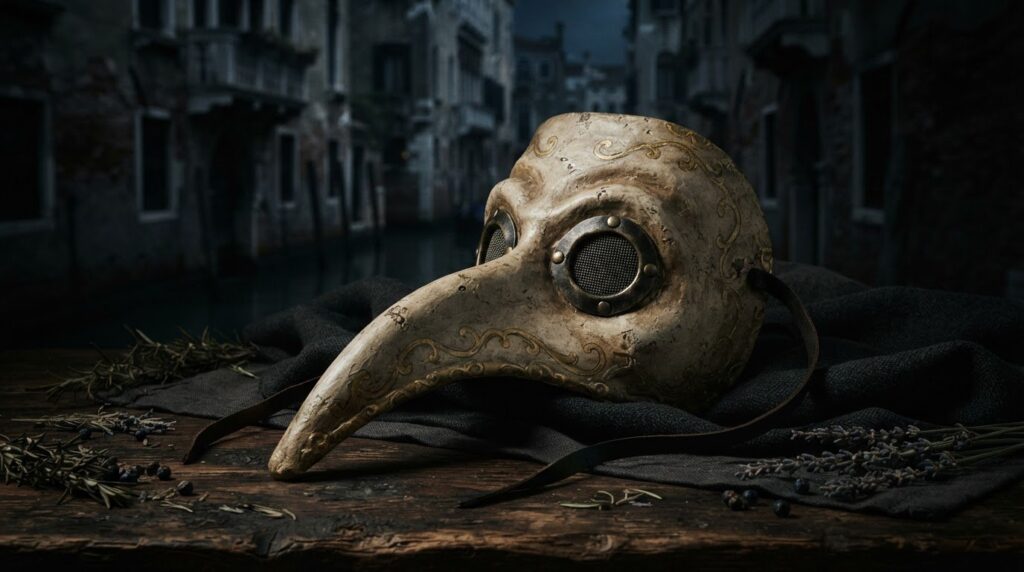
What if Venice’s most theatrical long-nosed mask began not on a stage, but in a plague ward? The medico della peste still looks like a figure from a shadowy carnival, yet its beaked silhouette was designed for a grim purpose. French physician Charles de Lorme is credited with creating the costume in 1619, reflecting the mistaken belief that “bad air” spread disease. The mask’s beak was packed with aromatic herbs, while its eerie shape offers one answer to a question many people ask: how did a symbol of fear become part of Venice Carnival?
Its journey from medical costume to carnival icon is only part of the story. This guide explores the mask’s 17th-century origins, how Venetian artisans make traditional papier-mâché versions, and what to look for when assessing craftsmanship. It also explains how the Medico della Peste differs from the theatrical Zanni and shares practical ideas for choosing and wearing this dramatic mask at a masquerade or special event. With its history, mystery and unmistakable profile, it’s a mask that makes a statement.
Key Takeaways
- Learn what the beaked silhouette represents and how the medico della peste became a distinctive emblem of Venetian Carnival.
- See which materials and finishing details to consider when assessing a mask’s craftsmanship.
- Explore how a once-ominous figure took on new meaning as a memento mori amid Carnival’s celebrations.
- Use the event’s dress code to guide your choice, then consider pairing the mask with a traditional tabarro or modern evening wear.
Understanding the Medico della Peste: The Beaked Icon of Venice
Medico della Peste is Italian for “Plague Doctor.” The name now evokes one of Venice’s most recognisable mask profiles: a face covering with a long, bird-like beak. Unlike the Colombina or characters from Commedia dell’Arte, this design did not begin as a theatrical disguise or Carnival costume. It came from a medical outfit shaped by fear, limited knowledge and the hope of protection. Today, its dramatic silhouette is one of the most distinctive Venetian mask styles.
The Origins of the Beak
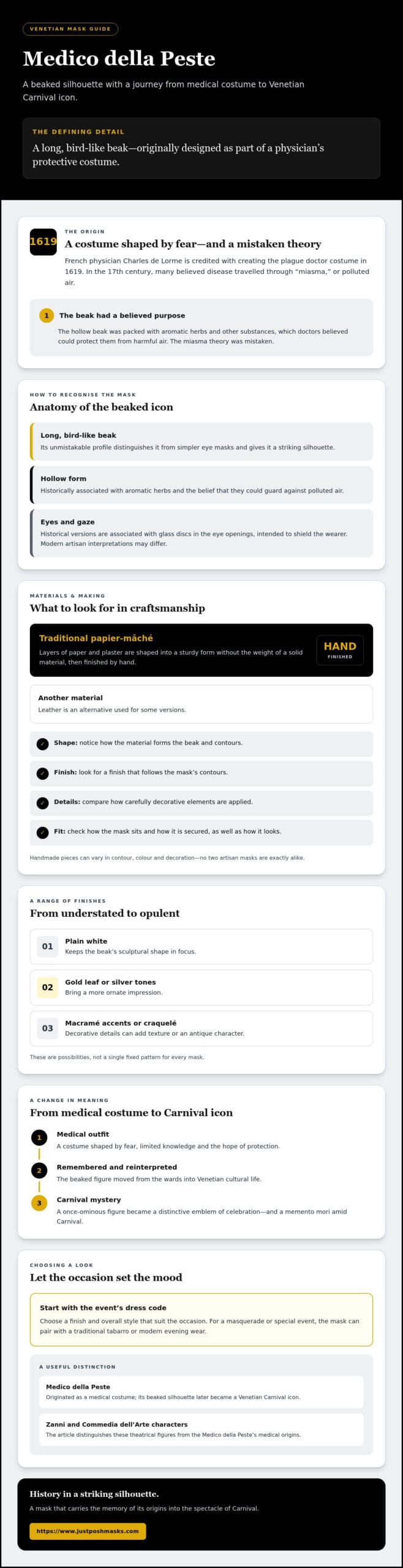
In the 17th century, many people believed disease travelled through “miasma,” or polluted air. French physician Charles de Lorme is credited with designing the plague doctor costume in 1619, including its distinctive beaked mask. The hollow beak was packed with aromatic herbs and other substances, which doctors believed could protect them from harmful air. The theory was mistaken, but the costume’s unusual form endured. For more historical context, see the Plague doctor costume overview.
The beak is more than an ornamental flourish. It gives the mask its unmistakable character, distinguishing it from simpler eye masks. If you want a striking silhouette that will be visible across a room, the long profile is a defining feature to consider.
A Symbol of Mystery and Protection
Imagine seeing a beaked figure approaching in a city gripped by disease. The costume’s covered face and striking outline could hardly have felt reassuring, even if its purpose was protection. Its birdlike shape later encouraged the “Crow Doctor” image found in modern folklore and popular culture. The nickname captures the mask’s eerie appearance, though the historical figure was a physician, not a supernatural character.
Over time, the Medico della Peste shifted from an emblem of illness and unease to a compelling piece of Venetian history. At Carnival, the wearer can play with that contrast, presenting a once-feared figure as theatrical mystery. The result is a mask with more behind it than a dramatic profile, and a distinctive way to bring history into a modern celebration.
The Anatomy of an Authentic Plague Doctor Mask
The beak may catch your eye first, but an authentic Venetian mask rewards a closer look. Traditional papier-mâché offers a shaped, lightweight form, while leather provides an alternative material for some versions. Skilled Venetian artisans build and finish each piece by hand, so small variations in contour, colour and decoration are part of its character. No two artisan masks are exactly alike.
Craftsmanship: The Papier-Mâché Process
In traditional papier-mâché work, layers of paper and plaster are shaped to create a sturdy form without the weight of a solid material. The finish is then applied by hand, bringing out the beak’s curves and the mask’s distinctive features. Compared with a generic moulded plastic imitation, this process allows for individual surface details and a crafted feel. For more historical context on the costume’s form and development, explore The Public Domain Review.
The eyes matter, too. Historical versions are associated with glass discs set into the eye openings, a feature intended to shield the wearer. Their placement gives the face its unsettling, distant gaze, while modern artisan interpretations may handle this detail differently. Fit and comfort depend on the individual mask, so check how it sits and how it is secured as well as how it looks.
Artistic Variations: From Plain to Opulent
Finishes can shift the mood from stark to sumptuous. A simple white surface puts the beak’s sculptural shape in focus; gold leaf, silver tones or macramé accents create a more ornate impression. A craquelé finish, with fine lines resembling age-softened paint, can lend a mask an antique character. These are decorative possibilities, not signs that every mask follows one fixed pattern.
When comparing options, look at how the material is shaped, whether the finish follows the contours, and how carefully the decorative details are applied. Just Posh Masks offers Medico della Peste masks handcrafted by Venetian artisans using traditional techniques and high-quality finishes. Browse the Medico della Peste mask selection to compare styles and consider which finish suits your event.
From Dark History to Carnival Glamour: The Cultural Evolution
The Medico della Peste began as a medical costume, not a party disguise. Its transformation came as the plague doctor’s image moved from the wards into Venetian cultural life, where the beaked silhouette could be remembered, reinterpreted and eventually worn for Carnival. A figure once associated with sickness and fear became an emblem of mystery, carrying history into the city’s celebrations.
That contrast gives the mask a particular role at Carnival. It can serve as a memento mori, a reminder of mortality, while also expressing the festival’s appetite for transformation and spectacle. Wearing an unsettling figure in a celebration turns unease into theatrical play. The medico della peste is no longer simply an image of dread; it offers a way to encounter the past with curiosity and a touch of mischief.
The Medico as a Satirical Character
As the character entered theatrical tradition, its imposing costume offered an obvious target for comic exaggeration. The beak and solemn appearance could make a performer seem grandly mysterious, inviting jokes about doctors who projected confidence without necessarily possessing the expertise they claimed. In Commedia dell’Arte, lazzi are comic routines that use timing and physical business to create laughs. A cautious, pompous or overdramatic doctor could suit that playful stage language. The shift helped audiences encounter a once-frightening figure as a character rather than a warning.
Venetian masks carry different stories, too. The Gatto cat mask, for example, draws on another distinctive character tradition, with a mysterious feline look quite unlike the plague doctor’s unmistakable beak.
The Modern Masquerade Appeal
Today, the mask’s silhouette makes a confident statement at themed events, Gothic balls and theatrical productions. It’s a distinctive alternative to a standard eye mask, pairing historical intrigue with dramatic visual impact. After the event, an artisan-made version can also be displayed at home as a conversation-starting piece of Venetian-inspired art.
A handcrafted Medico della Peste mask brings that history into a modern celebration, while individual details give each piece its own character. Explore the Medico della Peste masks to find a striking finishing touch for your next masquerade.
Selecting Your Medico della Peste for a Special Event
The long beak makes this mask a statement piece, so let the event’s dress code guide your choice. The medico della peste can feel theatrical at a themed gathering, while a refined finish and considered styling can give it a place at a formal masquerade. Use this checklist before choosing:
- Check the occasion: Follow the invitation’s dress code and consider whether a dramatic full-face profile suits the setting.
- Choose the mood: A restrained finish keeps attention on the silhouette, while decorative details create a more opulent effect.
- Plan the whole look: Make sure your outfit, mask and accessories work together.
- Think about wear: Consider how you’ll manage conversation, refreshments and time spent wearing a full-face mask.
Matching the Mask to Your Outfit
For a historical-inspired look, pair the mask with a traditional black cloak, or tabarro, and keep other details understated. Modern evening wear creates a different kind of drama: a tailored dark outfit lets the beak take centre stage, while an ornate mask can complement formal textures and accessories. Compared with a standard eye mask, this full-face silhouette has more visual impact, so balance it with the event’s level of formality.
For an opulent mood, consider decorative finishes such as gold-toned details or intricate metalwork where available. For a historical character, choose a restrained finish and build the look around period-inspired clothing rather than relying on the mask alone.
Ensuring a Comfortable Fit
Fit matters as much as appearance. Before the event, check how the mask is secured and whether its shape sits comfortably on your face. If you wear glasses or have facial hair, try the mask with them in place and check for pressure points, shifting or interference with the fit. Don’t assume every design will accommodate them equally.
A long beak also changes everyday party manoeuvres. Plan to lift or remove the mask when drinking, and allow a little extra space during conversation. For extended wear, take breaks if needed and follow any care or fit guidance provided with the mask.
Ready to find a distinctive finishing touch for your next event? Explore the Medico della Peste masks and choose a look that suits your occasion.
Make the Medico della Peste Your Finishing Touch
From its unsettling beak and history of mistaken protection to its later life as a theatrical Carnival figure, the medico della peste has a story unlike that of an ordinary masquerade mask. Its appeal today lies in this blend of history and spectacle, expressed through the distinctive details of artisan craftsmanship.
Handcrafted by skilled Venetian artisans using traditional techniques, each mask has its own character. Choose a finish that suits your event, pair it thoughtfully with your outfit, and plan for conversation and refreshments beneath that dramatic beak. Just Posh Masks is a specialist UK retailer offering Venetian masks online, with delivery across the country.
Browse our authentic Medico della Peste collection and find a mask that suits your next grand entrance.
Frequently Asked Questions
What was inside the beak of a Medico della Peste mask?
The beak was traditionally filled with aromatic herbs and other fragrant substances, which doctors believed could protect them from “miasma,” or disease-carrying bad air. Ingredients could include camphor, cloves, myrrh and mint. This idea reflected 17th-century medical beliefs, not an effective method of preventing infection. The long beak remains the mask’s defining feature today, though modern versions are historical and theatrical accessories rather than medical equipment.
Is the Medico della Peste a traditional Carnival mask?
It wasn’t originally created for Carnival. The costume was designed for plague doctors, and its beaked mask belonged to a medical outfit rooted in 17th-century beliefs about disease. Its later adoption into Venetian Carnival and popular culture transformed a once-feared figure into a dramatic symbol of history and mystery. Today, it’s a recognisable choice for masquerades, but its origins distinguish it from masks created for theatrical or festive traditions.
What is the difference between a Plague Doctor mask and a Zanni mask?
A Plague Doctor mask represents the historical physician’s costume, best recognised by its prominent beak and association with attempts to ward off supposedly harmful air. A Zanni mask belongs to Commedia dell’Arte, the Italian tradition of comic theatre, where Zanni is a servant character. Some Zanni masks have exaggerated noses, but their theatrical character and role differ from the plague doctor’s medical origins.
Can I wear a Medico della Peste mask to a formal masquerade ball?
Yes, if the event’s dress code welcomes a dramatic full-face mask. The Medico della Peste makes a bold alternative to a standard eye mask, and a refined finish paired with evening wear or a dark tailored outfit can create an elegant, theatrical look. Check the invitation first, then consider practicalities: the long beak can make conversation and drinking less convenient, so plan to remove the mask when needed.
Are these masks handmade in Venice?
Just Posh Masks offers authentic Medico della Peste masks handcrafted by skilled Venetian artisans using traditional techniques. The retailer focuses on high-quality finishes, and traditional papier-mâché and leather materials are available. Handcrafted work can have individual details, so no two artisan masks are exactly alike. If you’re comparing masks, check who made them and what materials are used rather than relying on the beaked shape alone as proof of Venetian craftsmanship.
How do I care for my authentic Venetian mask?
Handle your mask gently, especially around delicate decorative details, and store it somewhere dry and protected from pressure or knocks. Avoid immersing it in water or applying household cleaners, as materials and finishes can respond differently to moisture and chemicals. For everyday dust, use a soft, dry cloth with a light touch. If care instructions came with your mask, follow those first, since papier-mâché and leather may need different handling.
Disclaimer
This article was created with the assistance of AI and carefully reviewed by the team at Just Posh Masks to ensure accuracy and relevance. We combine automated insights with our experience in premium face coverings and accessories to provide helpful, trustworthy guidance.