
Colombina Mask: Venetian History, Style and How to Choose
October 9, 2026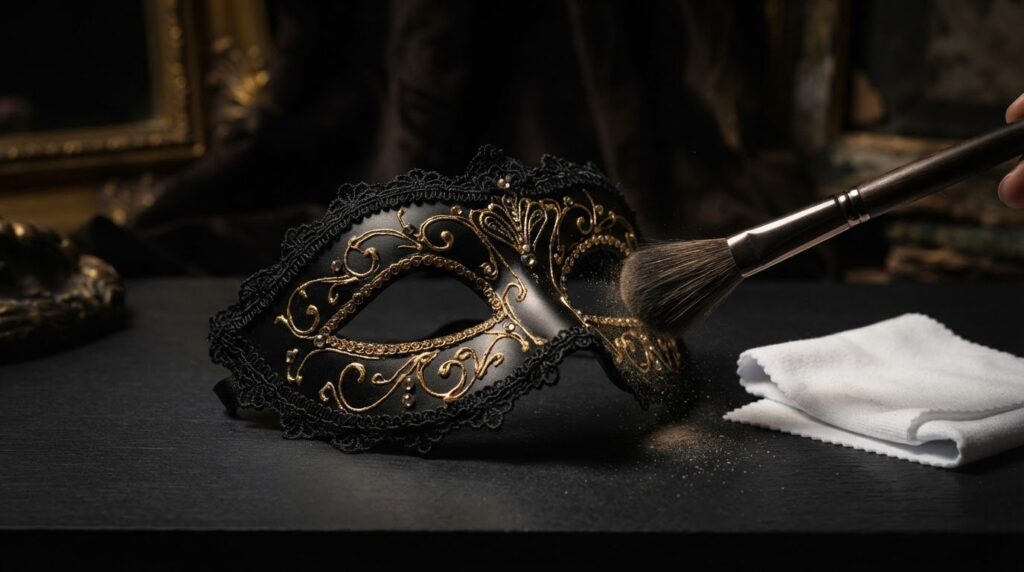
What if the safest way to clean your masquerade mask depends less on its shape than on the materials beneath its beautiful finish? If you’re wondering how to clean a masquerade mask without loosening crystals, dulling paint or snagging delicate lace, caution is a good instinct. A little dust is easier to deal with than a finish accidentally rubbed away.
Venetian masks carry stories as well as decoration. The Bauta was designed to let its wearer eat and drink while remaining concealed, while the richly adorned Colombina half-mask takes its name from a character in Commedia dell’arte. Their intricate details deserve a gentle touch long after the final dance.
In this guide, you’ll learn how to identify common mask materials, remove light surface dust with a low-risk approach and recognise when it’s wiser to stop. We’ll also distinguish gentle cleaning from disinfection, so you don’t reach for moisture or chemicals when dry dusting may be safer. Think of it as a little care before your mask makes its next elegant entrance.
Key Takeaways
- Learn how to clean a masquerade mask by identifying its materials and delicate decorations before choosing a method.
- Understand why dry dusting, cautious spot cleaning and soaking carry different levels of risk for ornate finishes.
- Prepare a clean work surface and review care guidance before handling your mask.
- Know when to pause rather than risk damage, and how gentle aftercare helps preserve the finish between occasions.
- Discover how traditional mask styles, from the Colombina to the Bauta, bring their own stories to every elegant entrance.
How to Clean a Masquerade Mask: Start with Its Materials
A quick clean should never come at the cost of an exquisite finish. Gentle mask cleaning means lifting loose dust or a light mark without soaking the mask or abrading its painted, textured or embellished surface. Papier-mâché, leather, metal filigree and lace can respond differently to moisture and rubbing. Crystals and other attached details may need extra care, too.
The mask’s material and finish determine its safest care routine. Before deciding how to clean a masquerade mask, identify what you’re holding. Its elegant silhouette may tell a story, but it isn’t a care label.
What materials and details might your mask have?
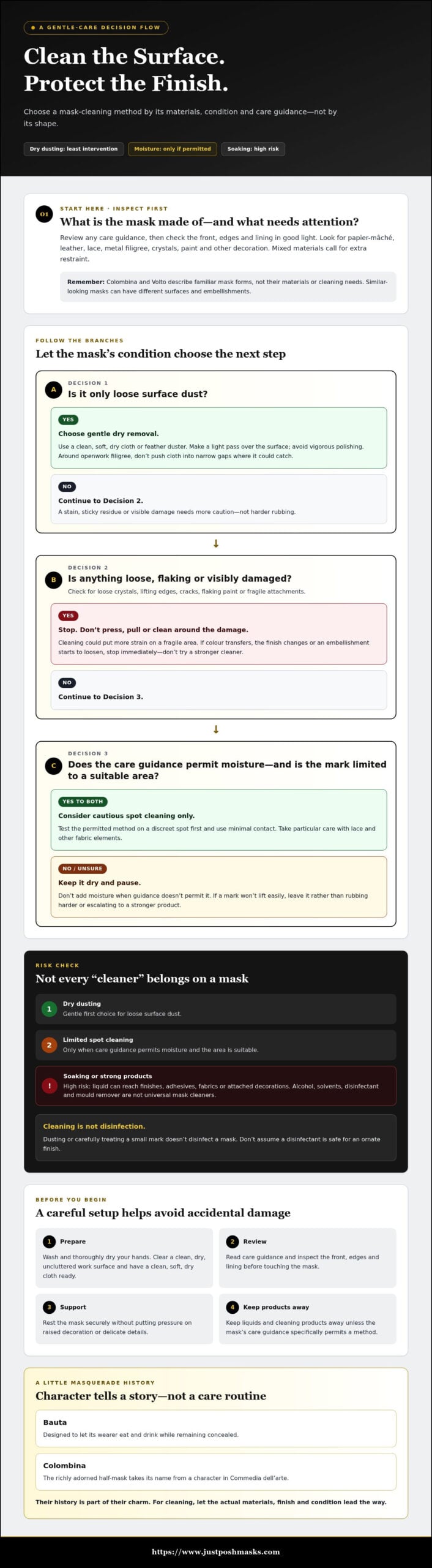
Start with any care guidance that came with the mask. Then inspect the front, edges and lining in good light. Look for papier-mâché, leather, lace or metal filigree, as well as crystals, paint and other decoration. Mixed materials call for particular restraint: a method that seems suitable for one area could affect another, and attached details may be more delicate than the base.
Work out whether you’re dealing with loose dust, a stain, sticky residue or visible damage. Surface dust may be all that needs attention. A mark that doesn’t lift easily, flaking paint or a loose embellishment is a reason to pause, not rub harder. Cleaning also isn’t the same as disinfection, so don’t assume a stronger product or more moisture is appropriate for an ornate finish.
What Colombina and Volto designs tell you, and what they don’t
Colombina and Volto are familiar figures in the Commedia dell’Arte tradition. Colombina is associated with a half-mask, while Volto is a full-face mask. Both forms belong to the rich history of masquerade. For broader historical context, see this History of Masquerade Masks.
The character and shape won’t tell you whether a particular mask is made from papier-mâché, leather, lace or metal, or how its finish will respond to cleaning. Two masks with a similar outline may have different surfaces and embellishments. Let the actual materials and visible details guide your next step, rather than relying on the character’s name or silhouette.
Which Cleaning Methods Are Gentle Enough for a Masquerade Mask?
A method that suits one mask can harm another. Dry dusting, limited spot cleaning and soaking carry different levels of risk, and the materials and finish matter more than a one-size-fits-all rule. With intricate metalwork, lace or crystals, even well-meant rubbing can snag, loosen or mark delicate details. Choose the least intervention that addresses what you can actually see.
Dry cleaning versus spot cleaning
For light surface dust, gentle dry removal is the cautious first step. Use a soft, clean cloth or feather duster, with a light touch around raised details. If the mask has openwork filigree, don’t push cloth into narrow gaps where it could catch. A light pass over the surface is safer than vigorous polishing. For more context on ornate designs, explore this luxury filigree mask guide.
Spot cleaning is a more involved option, not an automatic next move. Consider it only if the mask’s care guidance permits moisture and the mark is limited to a suitable area. Test the permitted method on a discreet spot first, using minimal contact. Take particular care with fabric elements. The textile care guidance from The George Washington University Museum and The Textile Museum offers useful preservation context for masks with lace or other fabric details.
Why strong cleaners and soaking can be risky
Soaking is a high-risk choice for an ornate mask. Liquid can reach finishes, adhesives, fabrics or attached decorations, even if the outer surface appears sturdy. Alcohol, solvents, disinfectant and mould remover aren’t universal mask cleaners either. A product intended for another material or purpose could affect colour, surface finish or delicate components.
Cleaning visible soil and disinfecting are different goals. Dusting or carefully treating a small mark doesn’t disinfect a mask, and a disinfectant shouldn’t be assumed safe simply because it promises to kill germs. If colour transfers, the finish changes or a decoration begins to loosen, stop immediately. Don’t try a stronger cleaner to “fix” the result. Careful handling helps preserve an artisanal mask for another occasion. Browse handcrafted masquerade masks for inspiration for your next elegant entrance.
How to Clean a Masquerade Mask Gently, Step by Step
A measured approach works best for an ornate mask: prepare carefully, remove only what can be lifted safely and don’t turn a small mark into a bigger problem. If you’re learning how to clean a masquerade mask, follow this conservative sequence and let the mask’s care guidance set the limits.
- Wash your hands and clear a work surface. Dry your hands thoroughly, then choose a clean, dry, uncluttered area where the mask can rest securely. Have a clean, dry, soft cloth ready. Keep liquids and cleaning products away unless the care guidance specifically permits a method.
- Review the care guidance before touching the mask. Check for instructions, then inspect the front, edges and lining. Look closely for loose crystals, lifting edges, cracks, lace, fine filigree or other fragile attachments. If something is already loose or damaged, don’t press or pull while cleaning around it.
- Support the mask securely. Rest it so its weight is supported without putting pressure on raised decoration or delicate details. Avoid gripping the surface you intend to clean; pressure in the wrong place can strain fragile areas.
- Lift loose dust gently. Use the soft, dry cloth with light strokes, moving over the surface rather than rubbing back and forth. Work around crystals, lace and open metalwork without snagging them or pushing cloth into narrow spaces. Stop if the dust doesn’t lift easily.
- Spot-clean only if the guidance allows it. For a limited mark, use the smallest amount of moisture permitted and test discreetly first. Keep contact local. Don’t saturate the mask or let moisture spread into nearby materials and decorations.
- Pause at the first sign of change. Stop immediately if colour transfers, texture shifts, the finish looks different or an embellishment moves. Don’t rub harder or try a stronger product. A persistent stain or sign of damage needs a different level of care.
Inspect, dust gently, spot-test and stop at signs of change. That’s the sequence to remember, not a promise that every mark can be removed at home. An elegant mask deserves patience as much as it deserves its grand entrance. Explore handcrafted masquerade masks for a design to treasure between occasions.
After Cleaning: Dry, Store, and Preserve Your Masquerade Mask
Cleaning is only half the care ritual. Unnecessary heat, pressure or friction afterwards can still affect a delicate finish, so let your mask rest before putting it away. If permitted spot cleaning involved moisture, allow the mask to air-dry naturally in a safe position, away from direct heat. Don’t wipe it vigorously or wear it while it still feels damp.
Dry and inspect before putting the mask away
Wait until the mask feels completely dry, including around the edges, lining, lace and attached details. Then inspect the surface again in good light. Check that the colour and finish look unchanged, the edges remain in place and decorations haven’t shifted. Moisture can linger in a seam or detail after the main surface feels dry, so take your time before returning the mask to storage.
If a stain remains or you notice damage, resist the temptation to reach for a harsher household cleaner. More scrubbing or a stronger product could make the problem worse. Leave the mark alone rather than risk the finish, particularly if the surface has changed or an embellishment feels loose.
Store it carefully between occasions
Choose a clean, dry place where the mask can rest without being crushed, rubbed or pressed against other objects. Keep heavy items away, especially if its design has raised filigree, crystals or delicate lace. Avoid stacking masks or placing one face-down on decorative details. A little room around the piece helps prevent unnecessary pressure and friction.
Care continues when it’s time to wear your mask again. Handle it gently as you put it on and take it off, rather than pulling on lace, crystals or other delicate features. The masquerade mask wearing guide offers further advice for keeping those finishing touches lovely through the occasion.
Learning how to clean a masquerade mask also means knowing when to leave it undisturbed. Natural drying, a careful inspection and thoughtful storage help keep your mask ready for its next elegant entrance. Explore handcrafted masquerade masks for a future occasion.
Let Your Next Masquerade Moment Begin
A cherished mask is more than the finishing touch to an outfit. It holds the anticipation of an evening, a character brought to life and memories worth keeping. Knowing how to clean a masquerade mask with care helps preserve those moments without asking an exquisite finish to withstand unnecessary fuss.
For your next occasion, choose a design that feels like you. Just Posh Masks specialises in authentic Venetian masquerade masks, with styles ranging from the expressive Colombina and Volto to leather and filigree metal designs. Each brings its own character to the grand reveal, whether you favour a delicate flourish or a striking silhouette.
Explore handcrafted masquerade masks and find a piece to treasure for your next elegant entrance.
Frequently Asked Questions
Can I clean a masquerade mask with water?
Use water only if the mask’s care guidance allows it, and limit it to a small, targeted area rather than wetting the whole mask. Water may affect painted finishes, papier-mâché, adhesives or fabric details, so a mask that looks sturdy may still be vulnerable. For example, don’t assume a metal filigree design can be rinsed if it also has lace or crystals. If you can’t establish that moisture is suitable, stick to dry dust removal.
Is it safe to use alcohol or disinfectant on a masquerade mask?
Don’t treat alcohol or disinfectant as general-purpose mask cleaners. They may alter colour or finish, and their suitability can vary across materials and attached details. Cleaning visible soil is also different from disinfection: removing a mark doesn’t sanitise the mask. If hygiene is a concern after an event, avoid spraying the mask or applying a product without care guidance that specifically permits it. A cautious approach is kinder to its decorative finish.
How do I remove makeup from the inside of a masquerade mask?
Start by checking the lining and any care instructions, since makeup on fabric may need different care from residue on a painted surface. Don’t use facial wipes, makeup remover or vigorous rubbing by default; these can introduce ingredients or moisture that the finish may not tolerate. If guidance permits spot care, test discreetly first and touch only the affected area. If pigment has transferred or the lining is delicate, stop rather than scrub.
What should I do if my masquerade mask has an unpleasant odour?
Let the mask air in a clean, dry, well-ventilated place, away from direct heat, and avoid masking the smell with perfume or room spray. Fragrance can leave residue, while moisture or a persistent musty odour may point to a problem that dusting won’t solve. Don’t seal a mask with an unexplained smell into storage. If you notice visible mould or the odour persists, avoid further home treatment and seek advice from a conservator.
Can I use a hairdryer to dry my masquerade mask?
No, avoid using a hairdryer, even on a cool setting. Direct airflow can put pressure on lightweight decorations, and heat may affect delicate materials or finishes. If a small area became damp during permitted spot care, leave the mask to dry naturally in a safe position. Don’t put it away or wear it while it still feels damp. Patience is less dramatic than a hairdryer, but far more fitting for an elegant keepsake.
How often should I clean a masquerade mask?
There’s no universal cleaning timetable for every mask. Clean it only when it needs attention, rather than repeatedly wiping it as part of a routine; unnecessary handling can add friction to delicate surfaces. After wearing it, look for visible dust or a fresh mark and follow the care guidance for its materials. For light dust, gentle dry cleaning may be enough. If the surface looks clean and unchanged, leave it be until the next occasion.
Disclaimer
This article was created with the assistance of AI and carefully reviewed by the team at Just Posh Masks to ensure accuracy and relevance. We combine automated insights with our experience in premium face coverings and accessories to provide helpful, trustworthy guidance.