New Year’s Eve Masquerade Masks in the UK: Find Your Perfect Party Look
October 5, 2026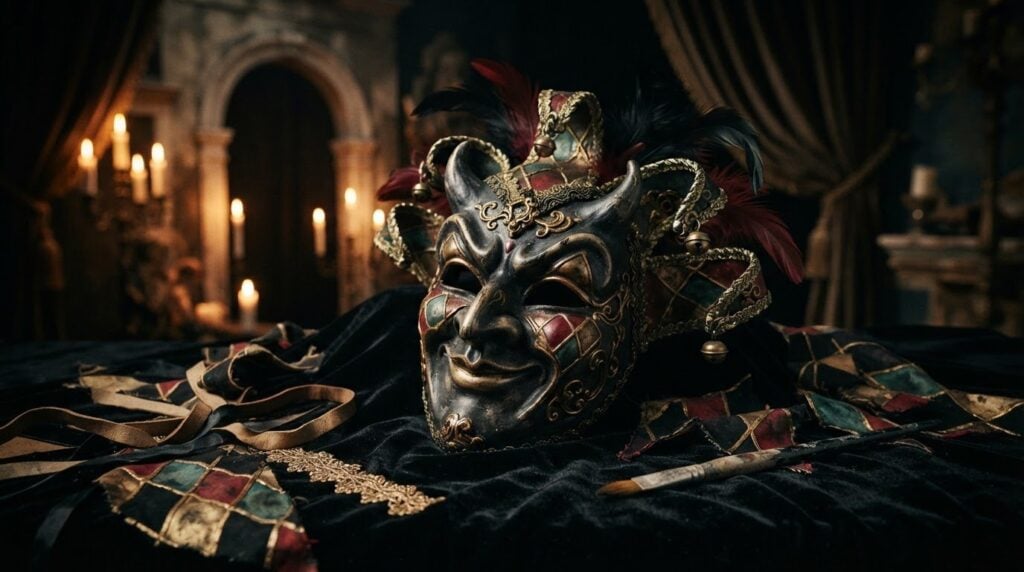
What if the Harlequin’s playful disguise began with a far darker face? The harlequin mask is linked to Arlecchino, a mischievous character from Italian Commedia dell’arte, whose theatrical past is richer than its colourful, jester-like appearance might suggest. Rather than a generic fool, Harlequin is a character with a distinctive history and a look that has evolved over time.
Born as a comic servant, Harlequin was traditionally poor, hungry and quick-witted enough to wriggle out of trouble. His early mask was dark and marked with demonic features. As the character developed into a more playful trickster, his appearance became increasingly stylised. Even the familiar diamond-patterned costume carries a story, recalling the patches of a servant’s humble clothes.
In this article, you’ll discover how Harlequin developed on stage, what the mask’s details and vivid costume suggest, and how this theatrical character relates to Venetian masquerade. You’ll also learn what sets Harlequin apart from other jester-inspired disguises, with practical pointers for choosing a look that suits your costume and occasion.
Key Takeaways
- A harlequin mask draws on a specific theatrical character, so it has a different story from a generic jester disguise.
- Read its patterns and expression as playful visual cues, not symbols with one universal meaning.
- Choose a design by considering the mood you want, the event’s formality and how the mask will work with your costume.
- Harlequin’s stage legacy connects with Venetian masquerade through a shared tradition of character and disguise.
What Is a Harlequin Mask? Meet the Character Behind the Disguise
A harlequin mask is a theatrical disguise associated with Harlequin, or Arlecchino, the comic servant character of Commedia dell’arte, Italy’s tradition of improvised stage comedy. Unlike a generic jester mask, it refers to a character with a particular performance history. There is no single fixed design: masks inspired by Harlequin can take different forms while still drawing on his theatrical identity.
Who is Harlequin in Commedia dell’Arte?
Harlequin began as a lively servant, often portrayed as poor and hungry but nimble and mischievous in his efforts to get by. The character is associated with Bergamo in northern Italy and was popularised on stage by actor Tristano Martinelli in the late sixteenth century. Over time, Harlequin became more witty and astute than the foolish servant audiences might first imagine. His story and changing character are explored in this overview of the Harlequin character in commedia dell’arte.
That history distinguishes him from the broader modern image of a jester, which can suggest a playful costume without pointing to a particular role. Harlequin is a character, not simply a hat with bells and a cheeky grin.
How did the character become associated with a mask?
In Commedia dell’arte, costume, gesture and mask worked together to help audiences recognise a character and follow the action. A mask was not an isolated emblem with one agreed meaning; it was part of the actor’s complete stage presence. Harlequin’s look made sense in combination with the performance, not just as a face covering.
His traditional mask is described as dark and distinctive, while the familiar patchwork costume recalls his humble servant origins. Later interpretations can be more decorative or whimsical, so a contemporary harlequin mask may capture the spirit of the role without reproducing one historic design. To explore how this theatrical heritage sits within the wider craft, browse authentic Venetian masquerade masks, made by skilled Venetian artisans using traditional techniques.
Harlequin’s Theatrical Roots: From Arlecchino to Venetian Masquerade
Harlequin’s story begins on the stage. He emerged as Arlecchino, a comic servant in Commedia dell’arte, the Italian theatrical tradition built around recurring character types, lively performance and familiar scenarios. Instead of relying on a fully fixed script, performers brought these recognisable roles to life through movement, timing and improvisation.
Harlequin and the Commedia dell’Arte stage
Arlecchino is associated with Bergamo in northern Italy and with the servant characters known as Zanni. Actor Tristano Martinelli helped popularise Harlequin in the late sixteenth century. The character’s development varied across performances and periods, so it is more accurate to think of his stage identity as evolving rather than having one unchanging script or appearance.
Costume and mask helped make a character legible to an audience. A recognisable silhouette or expressive face could signal a role before the actor spoke, while gesture and physical comedy added further clues. Arlecchino was a comic servant of Commedia dell’arte whose theatrical mask and costume helped audiences recognise his role within the performance.
From theatrical character to masquerade inspiration
Venetian masquerade and Commedia dell’arte are connected through the cultural life of masks, but they are not the same tradition. Harlequin’s identity took shape in theatre; Venetian masquerade masks also belonged to social and festive customs. Later stage, carnival and costume designs could draw on Harlequin’s recognisable character without copying a single historical model.
That distinction is useful when choosing a harlequin mask. Diamond patterns, contrasting colours or a comic expression may evoke the character, but no one design represents every period or interpretation. Venetian maskmaking remains a living craft, with other distinctive characters represented in styles such as Venetian masquerade masks. Browse the collection to see how Venetian artisans bring character and disguise to handcrafted designs.
Harlequin Mask Meaning: Reading Its Patterns, Expression, and Character
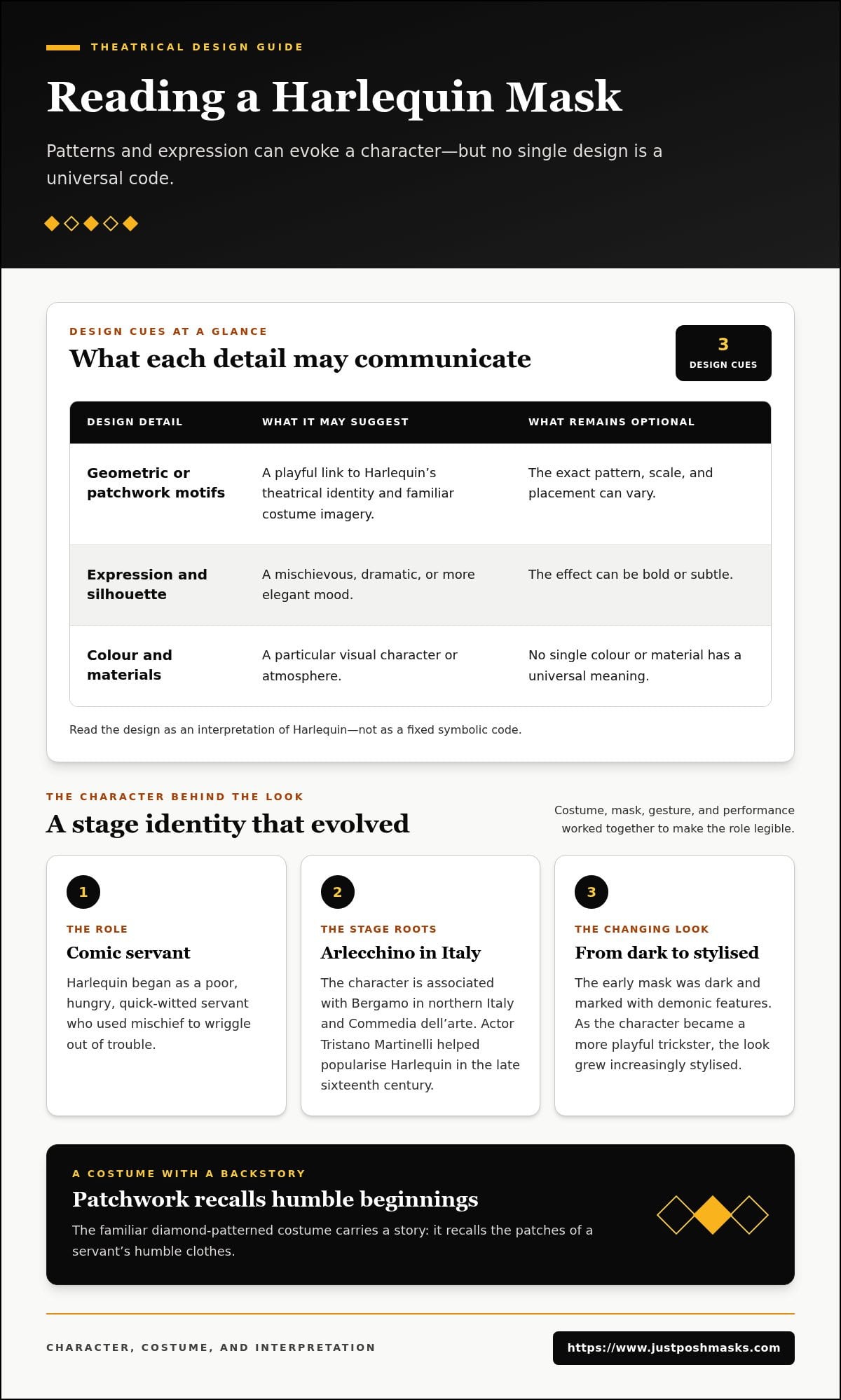
A harlequin mask can suggest comic energy, agility and theatrical mischief, but its details do not have one fixed meaning. The character’s stage identity is a useful starting point; the design’s pattern, expression and silhouette shape its individual mood. Treat the mask as a visual interpretation, not a code in which every colour or material has a universal definition.
What visual details are commonly associated with Harlequin?
Geometric shapes and patchwork-inspired motifs often bring Harlequin to mind, echoing the character’s familiar costume imagery. They are associations, not required features. An angular outline might feel lively or impish, while a smoother, more restrained shape can create a refined theatrical presence. Surface decoration adds personality, but it does not change the character’s theatrical roots.
Use this guide to distinguish the role’s familiar associations from optional design choices:
| Design detail | What it may suggest | What’s optional |
|---|---|---|
| Geometric or patchwork motifs | A playful link to Harlequin’s theatrical identity | The exact pattern, scale and placement |
| Expression and silhouette | A mischievous, dramatic or more elegant mood | How bold or subtle the effect feels |
| Colour and materials | A particular visual character or atmosphere | Any single colour or material as a universal symbol |
Harlequin mask or jester mask: what is the difference?
Harlequin is a particular character from Commedia dell’arte; “jester” is a broader label for comic or fool-like figures. A Harlequin-inspired design points towards a specific theatrical tradition, while a general jester design might draw on a range of familiar comic cues. Modern disguises can blend the influences, so the label is a helpful clue rather than a strict category.
Design variation does not erase a Harlequin mask’s theatrical roots; it lets each interpretation express the character in its own way. For a playful Venetian look, explore Venetian masquerade masks and find a design whose expression feels right for you.
Where the Harlequin Mask Fits Today: Theatre, Masquerade, and Personal Expression
Harlequin’s stage character continues to inspire theatrical costumes and masquerade looks. A mask can do more than finish an outfit: it can set the mood before you say a word. A harlequin mask might feel spirited and mischievous, polished and dramatic, or somewhere in between. Its appeal lies in the balance between a recognisable character and personal interpretation.
Choosing a Harlequin-inspired look for an occasion
Start with the atmosphere you want to create, then consider how the mask will sit with your outfit and the event. A lively pattern or expressive outline can bring playful energy to a costume, while a more restrained design may suit a formal masquerade. Check the full ensemble in combination: colour, shape and costume details should work together to suggest a coherent character.
- For a playful mood: Choose a lively, expressive design and let the rest of your costume echo its energy.
- For a more formal occasion: Consider a subtler look that complements your outfit instead of competing with it.
- For a theatrical costume: Build around the character, using the mask as one part of a wider performance-inspired look.
Comfort and visibility matter, too. The mask should feel manageable for the occasion and allow you to see comfortably. For practical pointers on fit, read this guide to wearing a masquerade mask.
Why the character remains memorable
Harlequin endures because audiences can recognise a vivid character quickly while still enjoying each performer’s interpretation. That theatrical quality makes the disguise inviting: it suggests a role to step into, not a personality you have to copy exactly. Venetian artisans continue to make masks using traditional techniques, keeping maskmaking a living craft while leaving room for individual expression.
Whether your taste leans playful or elegant, let the design spark your imagination. For inspiration rooted in Venetian masquerade tradition, explore Venetian masquerade masks and see which character catches your eye.
Choose a Mask with a Story to Tell
Harlequin’s appeal lies in the meeting of character and disguise. Rooted in the comic world of Commedia dell’arte, he is more than a generic jester: his theatrical identity gives the harlequin mask a distinctive sense of play. Patterns and expressions may evoke that heritage, but no single design or colour has to carry one fixed meaning.
As you choose a look, consider the mood you want to create and how the mask will complement your outfit and occasion. A playful interpretation can bring theatrical mischief, while a more restrained design may suit an elegant masquerade. Just Posh Masks is a UK specialist retailer of authentic Venetian masquerade masks, including Jester and Jolly styles crafted by skilled Venetian artisans using traditional techniques.
Explore authentic Venetian masquerade masks online and find a design that speaks to your sense of occasion. Let a little theatrical history inspire your next grand entrance.
Frequently Asked Questions
What does a Harlequin mask represent?
A Harlequin mask evokes Arlecchino, the comic servant character from Commedia dell’arte, and the playful world of theatrical disguise. It can suggest mischief, agility and a lively stage presence, inviting the wearer to step into a character rather than simply conceal their identity. Its symbolism is not fixed: patterns, expression and decoration vary, so different designs can create distinct moods while drawing on the same theatrical tradition.
Is Harlequin the same as a jester?
No. Harlequin is a particular character from Commedia dell’arte, while “jester” is a broader term for comic or fool-like figures. Harlequin has a distinct theatrical identity and history, rather than describing every playful character in a cap or colourful costume. Modern masks and costumes can blend familiar cues from both, so the labels may overlap in contemporary disguises. Think of Harlequin as one character, not a synonym for every jester.
Where did the Harlequin character originate?
Harlequin, known in Italian as Arlecchino, is associated with Commedia dell’arte, the Italian tradition of comic theatre built around recurring characters and performance. The character is linked to Bergamo in northern Italy, and actor Tristano Martinelli helped popularise him in the late sixteenth century. His portrayal changed over time, placing Harlequin in theatrical history rather than making him a generic jester.
Why are Harlequin masks often shown with geometric patterns?
Geometric and patchwork-inspired motifs are familiar visual associations with Harlequin, partly because his theatrical costume is widely represented with a patchwork look. These patterns help signal a playful, theatrical character, but they are not required features of every Harlequin mask. Nor should a particular colour or material be treated as carrying one universal historical meaning. Designs interpret the character in different ways, from bold and lively to more restrained.
Were Harlequin masks worn in Venetian Carnival?
Harlequin belongs to the theatrical tradition of Commedia dell’arte, while Venetian Carnival is a wider setting for masquerade and disguise. The two are connected by a shared cultural fascination with masks and character, but that does not mean every historic Carnival mask represented Harlequin. Harlequin-inspired disguises appear in later masquerade and costume contexts, while specific claims about historic Carnival use should be made with care.
What is the difference between a Harlequin mask and a Colombina mask?
A Harlequin mask draws on Arlecchino, a specific comic character from Commedia dell’arte. A Colombina mask is a distinct Venetian eye-mask style, not another name for Harlequin. Their designs can differ, and contemporary interpretations may borrow visual cues from several traditions, so appearance alone does not always settle the label. The useful distinction is the reference: Harlequin points to a theatrical character, while Colombina names a mask style.
Disclaimer
This article was created with the assistance of AI and carefully reviewed by the team at Just Posh Masks to ensure accuracy and relevance. We combine automated insights with our experience in premium face coverings and accessories to provide helpful, trustworthy guidance.