Masquerade Ball Themes for Adults and Attire Ideas
November 11, 2026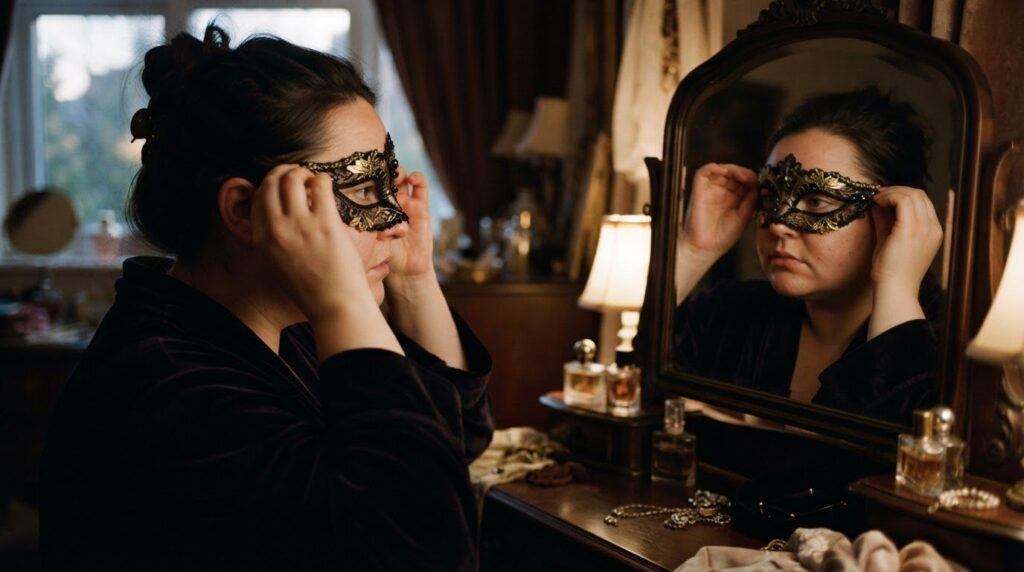
The mask that looks most striking on its own may not be the one that best suits your face. Choosing a masquerade mask for your face shape starts with its outline: angular or elongated designs can add definition and create the appearance of length on a round face, while softer curves can complement more angular features. Comfort matters just as much as the mirror test, so consider the mask’s fit and material as well as its shape.
It’s easy to focus on colour and embellishment when picturing your grand entrance, but proportion helps a mask feel like part of your look rather than a disguise that wears you. This guide shows you how to identify your face shape, choose a design that balances your features and assess the fit. You’ll also see how mask styles and materials affect the overall look, so you can arrive at a ball or themed celebration with a little Venetian mystery in every detail.
Key Takeaways
- Choose a mask outline that complements your features; elongated or angular details can bring visual length to a round face.
- Consider the width across your cheeks and around your eyes to find a shape that sits comfortably.
- Compare materials by how they feel and flex, then match the style to your event and how long you’ll wear it.
- Balance your mask with your outfit so its shape and detailing make the impression you want.
- Explore Volto Full Face Masks, Colombina Eye Masks and Bauta Masks to find a Venetian style that suits your look.
Masks that visually lengthen round faces
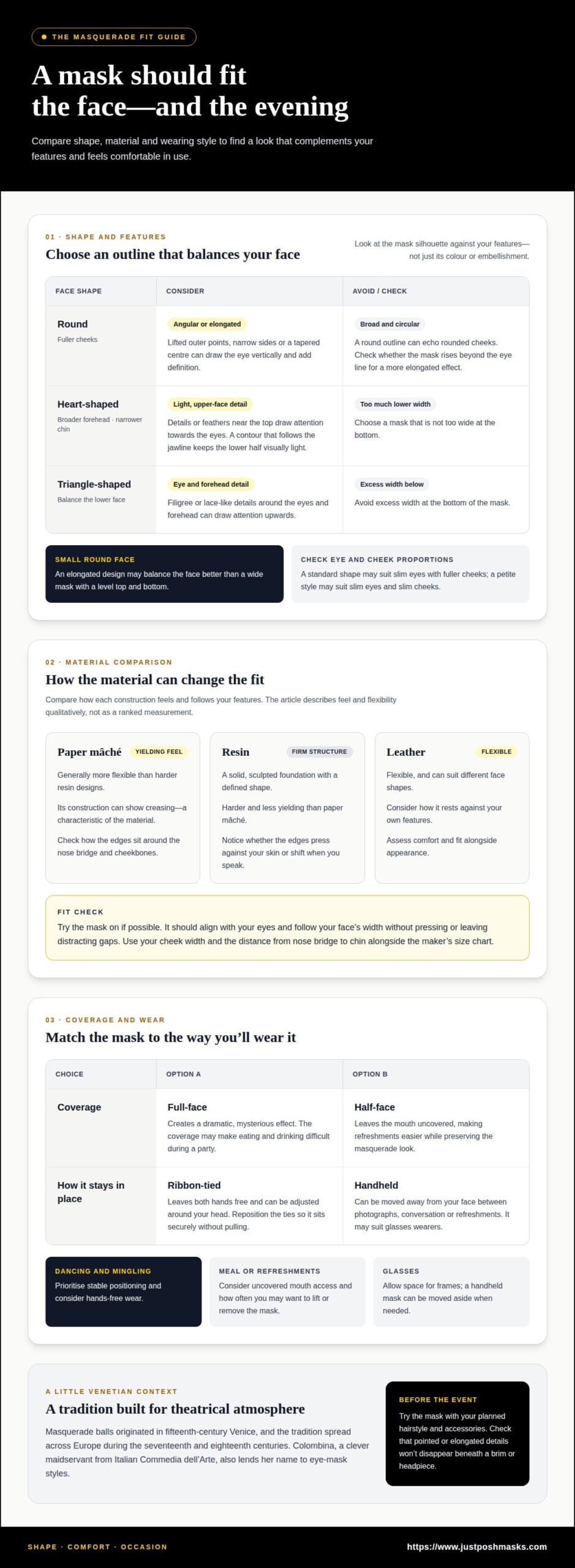
- For a round face, choose an angular or elongated outline to add definition. Lifted outer points, narrow sides or a tapered centre draw the eye vertically. A broad, circular design, by contrast, can echo rounded cheeks and emphasise their curve. Compare the mask’s silhouette with your face in a mirror: an outline that rises beyond the eye line can create a more elongated effect.
- Look for details that draw the eye upwards or downwards. Feathers, elongated edges and a narrow drop at the centre can create a vertical line without overwhelming the face. A small round face, for example, may be better balanced by an elongated design than by a wide mask with a level top and bottom. If your eyes are slim but your cheeks are full, try a standard shape; a petite style may suit slim eyes and slim cheeks better.
- Choose how the mask will stay in place as carefully as its shape. A ribbon-tied mask leaves both hands free and can be adjusted around your head. A handheld mask can be moved away from your face between photographs, conversation or refreshments, and may suit glasses wearers. Consider the event: hands-free wear may be practical at a lively masquerade ball, while a handheld design offers flexibility for a brief entrance or portrait.
- For a heart-shaped face, balance a broader forehead and narrower chin with a mask that isn’t too wide at the bottom. Details or feathers near the top draw attention towards the eyes, while a contour that follows the jawline keeps the lower half visually light. The same principle applies to triangle-shaped faces: avoid excess width at the bottom and consider filigree or lace-like details around the eyes and forehead.
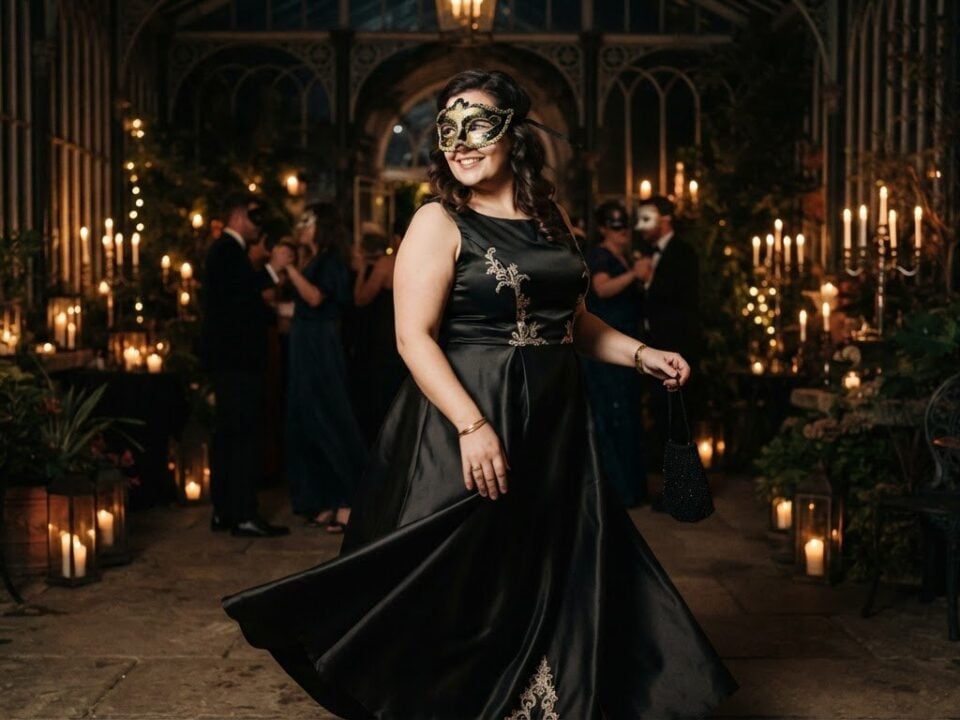
- Let the occasion guide your final choice. Masquerade balls originated in fifteenth-century Venice, where masks helped create a theatrical atmosphere; the tradition spread across Europe during the seventeenth and eighteenth centuries. Colombina, a character from Italian Commedia dell’Arte, is traditionally portrayed as a clever maidservant, and her name is also used for eye-mask styles. For a modern ball, choose a shape that works with your outfit and feels comfortable to wear. Try it with your planned hairstyle and accessories, then check that pointed or elongated details won’t disappear beneath a brim or elaborate headpiece.
Comfort, materials and mask shape
Adjust a ribbon-tied mask by repositioning its ties so it sits securely across your eyes without pulling. For a handheld style, move the mask slightly until its eye openings align comfortably, then hold it at that position.
- Match the mask to the event’s theme before choosing its material. An ornate design with delicate details can complement a formal masquerade ball, while a simpler style may suit a relaxed themed party. Consider how long you expect to wear it, too: a mask that feels comfortable for a brief entrance may become distracting over an evening of dancing, conversation and photographs.
- Assess the fit across your whole eye area, not just at the bridge of your nose. The mask should align with your eyes and follow your face’s width without pressing or leaving distracting gaps. Compare the distance from your nose bridge to your chin and measure across the broadest part of your cheeks. Use these measurements alongside the maker’s size chart to assess the proportions.
- Choose a shape that balances coverage with the event’s practicalities. A full-face mask creates a dramatic, mysterious effect, but its coverage may make eating and drinking difficult during a party. A half-face style leaves the mouth uncovered, making refreshments easier while preserving the masquerade look. If the event includes a meal, consider how often you’ll want to remove or lift the mask.
- Give material and finish equal consideration. A mask’s construction affects how it rests against your face as well as how it looks. Try it on before the event, if possible, and notice whether its edges press against your skin or shift when you speak. A lightweight eye mask may suit someone who prefers a less imposing style, while a fuller design makes a bolder statement.
- Think through the evening’s small rituals before settling on a style. If you wear glasses, allow space for their frames and consider a handheld mask that can be moved aside easily. If you’ll be dancing, speaking and enjoying refreshments, prioritise stable positioning and uncovered access to your mouth. Explore Venetian mask styles with these practical details in mind, then choose the design that complements your outfit and occasion.
Mask materials and their fit
Handheld masks can suit glasses wearers because you can move them away from your frames when needed. Choose a shape that sits comfortably over the eye area without pressing against your glasses.
- If you have a broad face or want a little flexibility, compare how different materials follow your cheeks and nose. Paper-mâché masks are generally more flexible than harder resin designs, while leather masks are also flexible and can suit different face shapes. Consider how each material sits against your features rather than choosing by appearance alone.
- Consider resin if you prefer a firm, sculpted foundation. Resin provides a solid base, while paper mâché has a more yielding feel. A structured mask keeps its defined shape; a more flexible one can adapt more readily to facial contours. The right choice depends on the fit you want and the style of the event.
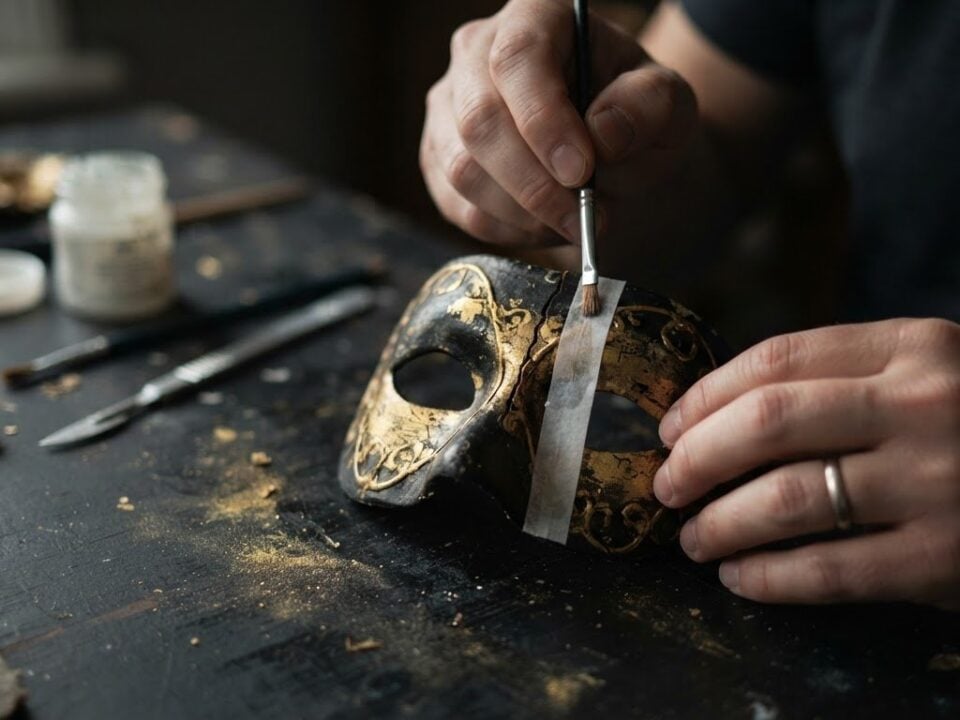
- Look closely at the mask’s base before deciding. Paper mâché can show creasing because of how the material is made; this is a characteristic of its construction. You may prefer a smooth finish, while another wearer may value an artisanal texture. Check how the edges sit against your face, especially around the nose bridge and cheekbones.
- If you wear glasses, consider a handheld design that you can move away from your face when needed. Position it for a photograph, then lower it without disturbing your frames. If you prefer a mask that stays in place, compare its width around the eyes with your glasses and check whether the edges press against the frames.
- Consider how the mask’s inside and outside feel against your skin. Flexible eye masks may use a thin plastic layer, cotton lining inside and fabric coating outside. This differs from a solid resin base or shaped paper mâché. Think about which surface will feel comfortable during the event, and examine the mask’s shape as well as its decorative finish.
- Match the material to your face and the mask’s scale. A mask that is too large can look disproportionate on a smaller face, while a flexible material may follow a broader face more naturally. Compare the mask’s width with your cheeks, then check that its eye openings align with your own. This simple fit check can help you choose a design that feels considered, not cumbersome.
Choosing a mask shape to suit your face
Identify your face shape by comparing its length with the width of your forehead, cheekbones and jaw. Note which area is broadest and whether your jawline is curved, angular or tapered. These clues help distinguish oval, square, heart-shaped, long and triangle-shaped faces.
- When choosing a masquerade mask for your face shape, compare your face’s length with its width at the broadest part of your cheeks. A round face tends to look similar in width and length, while a long face appears noticeably longer. Treat this comparison as a guide, not a strict category: hair, expression and mask placement can change the impression.
- For a square face, choose curved edges and flowing lines to soften a defined jaw. Cat-eye and butterfly shapes draw attention towards the eyes, contrasting with angular features. If you want a gentler effect, avoid a mask dominated by sharp, straight edges; repeating the jaw’s angles can make the overall look feel more geometric.
- Balance an oval face with a well-proportioned mask and gentle curves. This face shape suits a range of designs, so consider how the mask’s width relates to your cheeks and eye area. A half-face mask worn straight or at a slight tilt can create a graceful line without competing with your natural proportions.
- For a heart-shaped face, consider the contrast between a broader forehead and narrower chin. Choose a mask that isn’t too wide at the bottom, with detail near the eyes or upper edge. Feathers or intricate patterns draw attention upwards, while a lower contour that follows the jaw keeps the chin area visually light.
- Give a long face more horizontal emphasis with a broader mask, especially across the cheeks. A design that extends sideways can create the impression of added width and balance the face’s length. If you want a more even-looking proportion, avoid a strongly vertical silhouette. Check the mask’s width against your cheekbones before settling on its outline.
- For a triangle-shaped face, avoid excessive width along the mask’s lower edge, which may draw focus towards the jaw. Intricate details around the eyes and forehead, including filigree or lace, can shift visual interest upwards. Compare the upper and lower outlines: a lighter, more detailed top can balance a broader lower face.
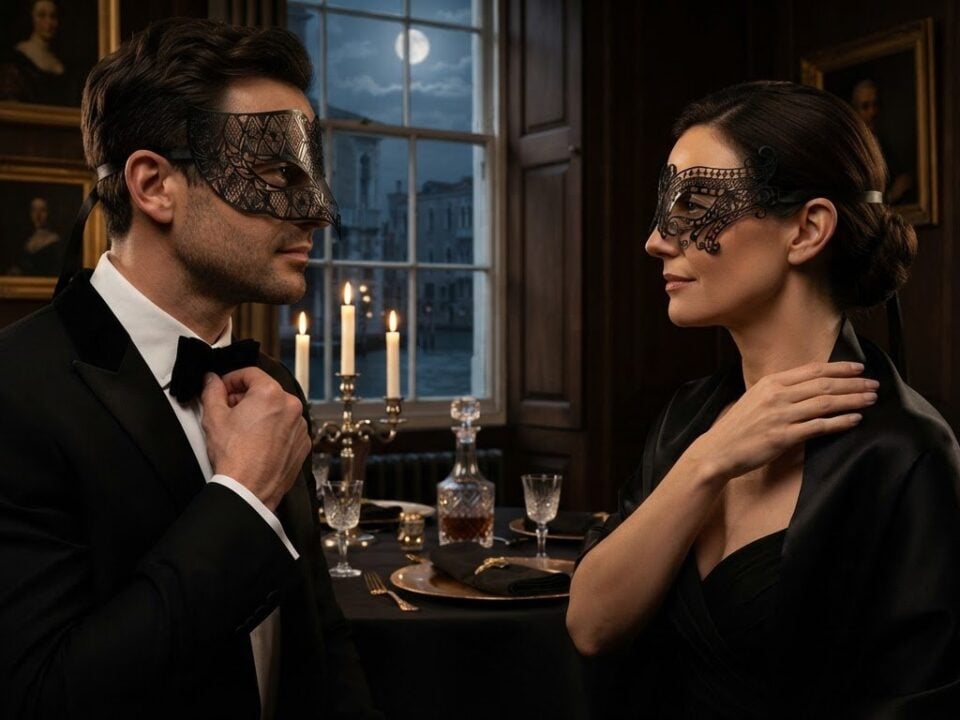
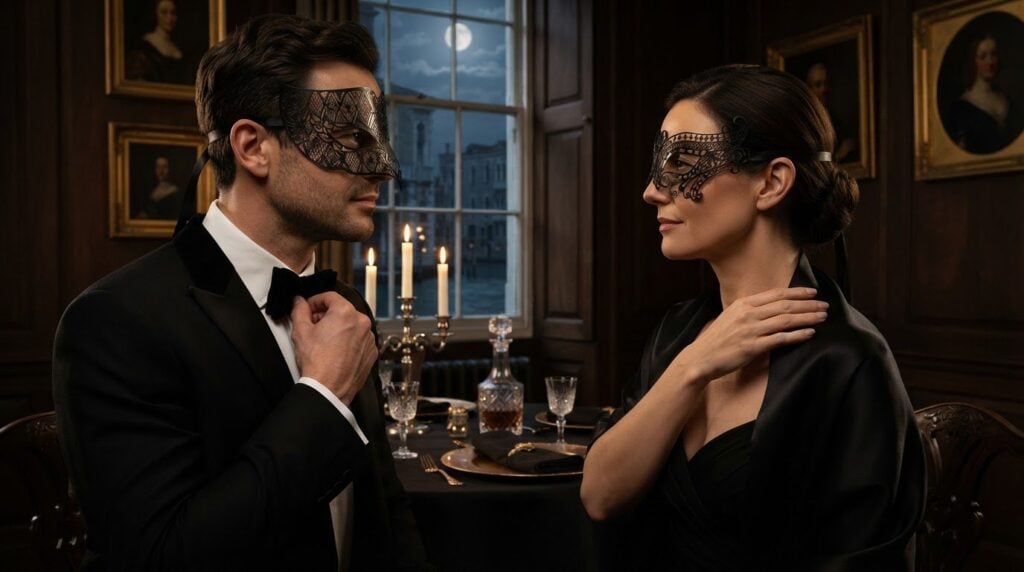
- A practical principle for choosing a masquerade mask for your face shape is to prioritise proportion over the label alone. Try the mask against your cheek width and eye area, then consider how its curves or points interact with your jawline. For a coordinated pair, matching masquerade mask designs can bring two distinct face shapes together without requiring identical proportions.
Just Posh Masks: Volto Full Face Masks
Just Posh Masks offers Volto Full Face Masks for a dramatic Venetian look. If you’ve considered face shape, coverage and occasion, this style suits a bold statement. The collection features masks crafted by Venetian artisans using traditional techniques.
Prefer to leave more of your face visible? Colombina Eye Masks offer a lighter eye-mask silhouette, while Bauta Masks bring another distinctive Venetian style. For a coordinated look with a companion, Couples Masquerade Mask Sets pair two masks for the occasion. Compare each shape with your features and outfit, then choose the design that feels right for your grand entrance.
Contact Just Posh Masks to discuss your mask choice.
Make your entrance your own
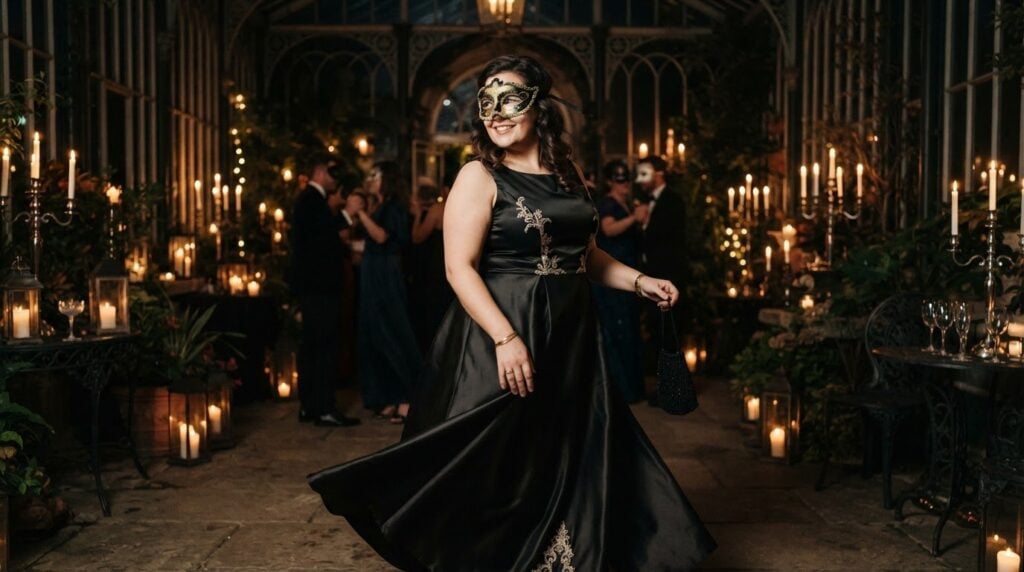
Your mask can do more than complete your outfit; it can set the mood before you say a word. As you choose a masquerade mask for your face shape, think about the impression you want to make and how the design will work with your outfit. A bold Volto Full Face Mask, a Colombina Eye Mask or a Bauta Mask brings its own Venetian character to your look.
Choose a design that feels like you, whether you’re dressing for a grand ball, a themed celebration or a special evening with someone close. If you are also setting the scene for an event or styling a festive venue, browsing vibrant arrangements from Flowers Alley can offer inspiration for matching your accessories to a rich, colourful setting. Paying attention to proportion and comfort can help you wear your mask with confidence, not just admire it in the mirror.
Contact Just Posh Masks for help finding a style for your occasion, and get ready to make your entrance with flair.
Frequently Asked Questions
Which masquerade mask styles suit oval, round, square, heart-shaped and long faces?
Oval faces suit many outlines, while round faces often pair well with lifted, elongated shapes. Square faces benefit from curved edges; heart-shaped faces suit lighter lower edges and detail near the eyes. For long faces, a wider horizontal silhouette can create visual balance. Use these as starting points, then consider your hairstyle and outfit neckline, which both affect how the mask’s outline looks.
What mask shapes flatter a round face?
Angular or tapered masks can complement a round face by adding contrast. Try raised outer corners or a narrow central point instead of a broad circular outline. If your cheeks are full but your eye area is slim, compare a standard eye-mask shape with a petite one. The most flattering option is one that feels proportionate across your features.
What masquerade masks suit a square or angular face?
Curved, sweeping outlines can soften the look of a square or angular face. Cat-eye and butterfly shapes are worth considering if you want to draw attention towards your eyes. Picture the mask with a hairstyle that exposes your jawline: a rounded edge creates contrast, while another angular silhouette may echo the face’s stronger lines.
How do I choose a mask for a heart-shaped or narrow chin?
Choose a design with a relatively narrow lower edge and details that draw attention towards the eyes or forehead. Delicate upper detailing, such as lace-like patterns, adds interest without making the chin appear more tapered. If you’re wearing an updo that exposes your forehead, consider how the visible balance between forehead, cheeks and chin changes with your styling.
Do half-face, full-face and eye masks suit different face shapes?
Yes, because each style frames a different amount of the face. A half-face mask leaves the mouth visible, a full-face design makes a more dramatic statement, and an eye mask keeps the focus around the eyes. Rather than matching one type to each face shape, compare the mask’s outline with your features. For example, a broad eye mask may feel more balanced than a narrow one on wider cheeks.
How should a masquerade mask fit comfortably and securely?
A comfortable mask aligns with your eyes without distracting pressure at the nose or cheekbones. Try it with your event hairstyle and glasses, if you wear them, since frames and hair can affect its placement. Look straight ahead, turn your head and speak; notice whether the mask shifts or interferes with your natural movements. A secure fit should feel steady, not tight.
Disclaimer
This article was created with the assistance of AI and carefully reviewed by the team at Just Posh Masks to ensure accuracy and relevance. We combine automated insights with our experience in premium face coverings and accessories to provide helpful, trustworthy guidance.