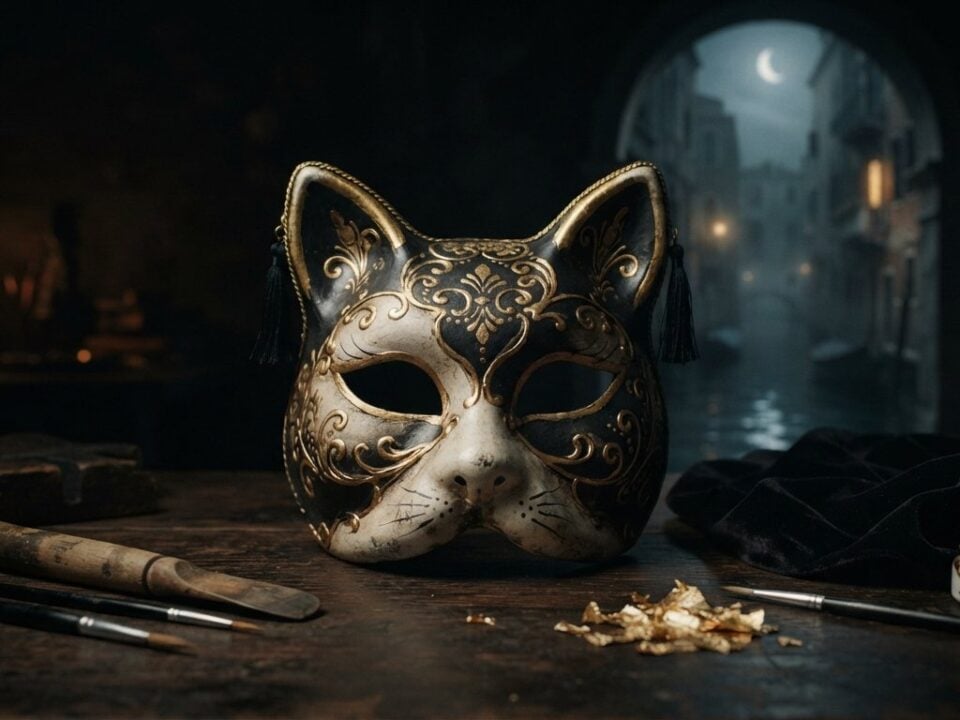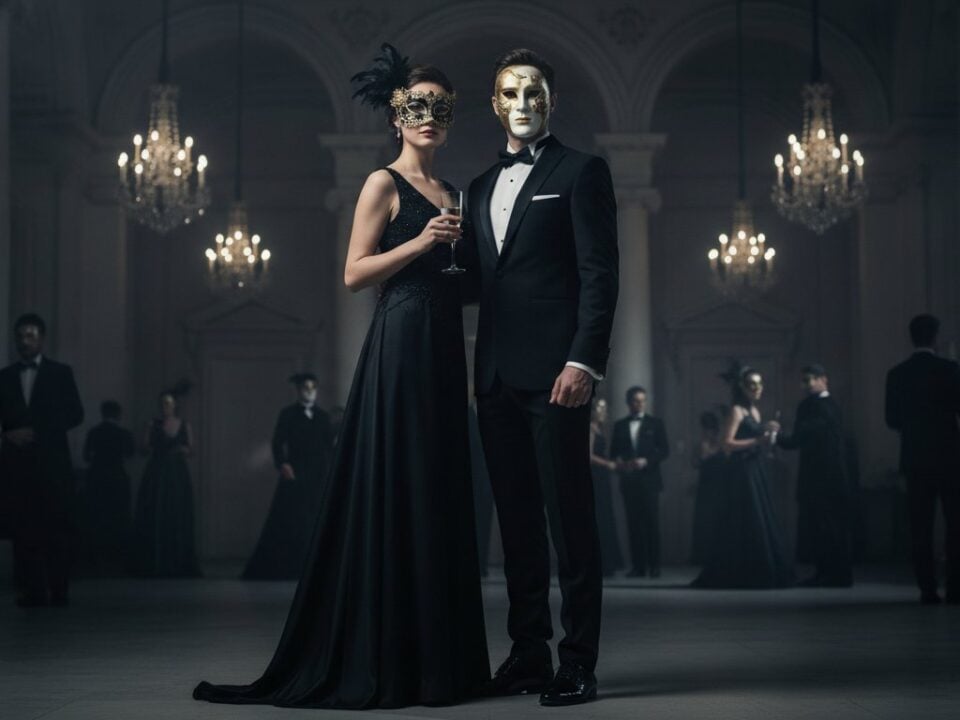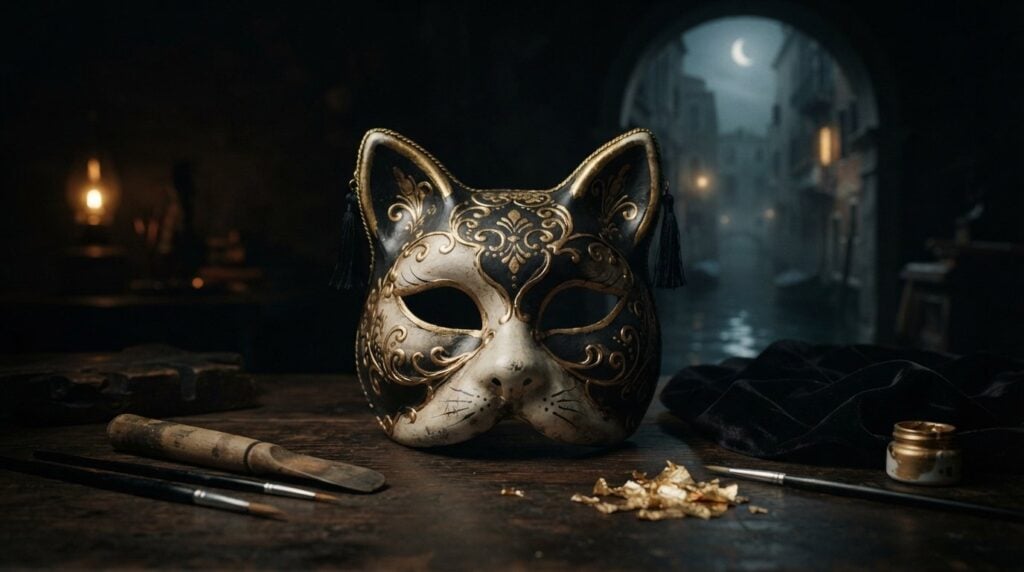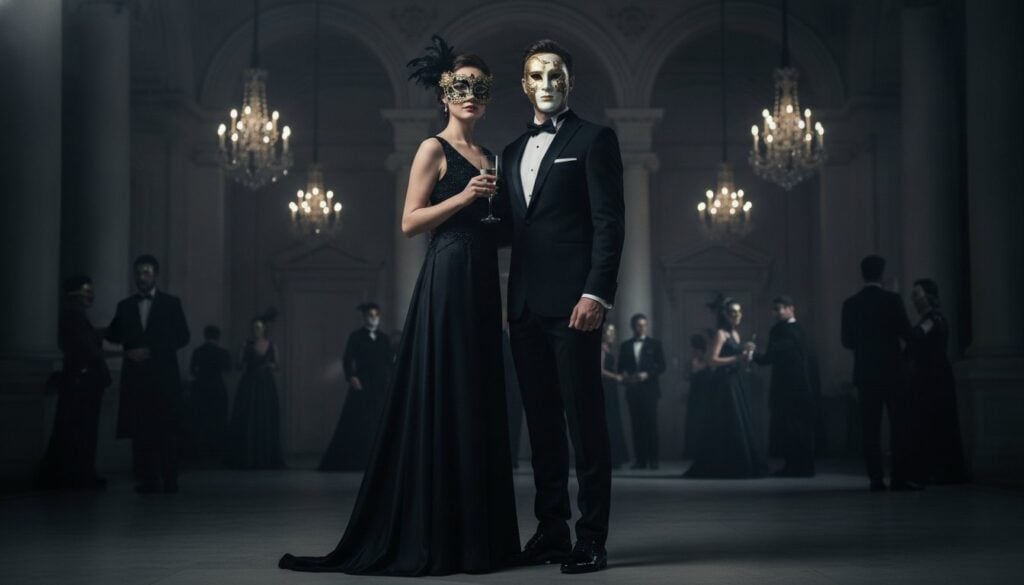
The Gatto Cat Mask: A Guide to Venice’s Most Mysterious Feline Disguise
September 20, 2026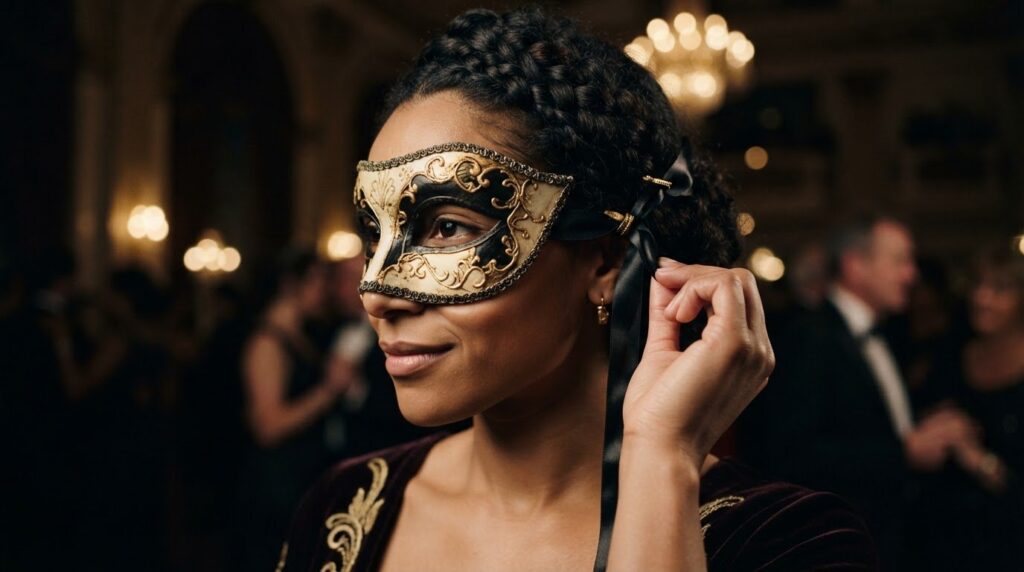
You’ve spent weeks selecting an exquisite, hand-painted Colombina mask, only to find yourself spending the entire evening pushing it back up your nose every time you smile or speak. It’s a common frustration that can quickly dampen the excitement of a high-fashion gala. Learning how to keep a masquerade mask from slipping is the essential difference between feeling like a mysterious Venetian noble and spending the night in a constant, awkward battle with gravity.
We understand that a mask is more than just an accessory; it’s a piece of heritage. Even the sharp-witted Colombina of the 16th-century Commedia dell’arte knew the importance of a secure fit. Lore tells us her iconic half-mask was designed specifically because the actress playing her refused to hide her expressive beauty behind a full-face disguise, needing a mask that stayed put during her lively gestures. You deserve that same confidence and freedom of movement.
In this guide, we’ll reveal professional secrets and artisan techniques to ensure your mask stays perfectly in place from the first dance to the final reveal. You’ll discover how to master ribbon tension, use discreet theatrical adhesives, and choose the right materials for your face shape. We’ll explore everything from the physics of friction to the benefits of lightweight filigree, ensuring your evening is defined by elegance rather than adjustments.
Key Takeaways
- Discover why handcrafted papier-mâché masks provide a breathable, custom fit that adapts to your facial contours, significantly reducing the risk of a mid-gala wardrobe malfunction.
- Master the professional “Criss-Cross” tying method and learn how to keep a masquerade mask from slipping by choosing textured ribbons that provide maximum friction against your hair.
- Implement the “Anchor Braid” technique to create a hidden foundation for your ribbons, ensuring your mask stays perfectly positioned even during the most spirited dances.
- Explore how prep work, such as applying a matte primer to the bridge of your nose, creates a slip-resistant surface that protects your makeup and your mystery.
- Select the ideal mask for your evening’s activities, from delicate filigree for lightweight comfort to handheld stick styles for ultimate flexibility and ease.
The Science of the Slip: Why Masquerade Masks Lose Their Grip
Understanding how to keep a masquerade mask from slipping begins with a basic principle of physics: the “slip factor.” This is the ongoing tension between the weight of your mask, the natural oils on your skin, and the security of your fastenings. While mass-produced plastic alternatives sit awkwardly on the surface, authentic papier-mâché masks are artisanal masterpieces that breathe. Over the course of an evening, these traditional materials actually begin to mould to your specific bone structure, creating a bespoke fit that resists movement. Plastic, by contrast, traps heat and moisture, creating a layer of perspiration that acts as a lubricant.
Historically, the Volto mask serves as the perfect case study in balance. As a full-face design, the Volto was a staple of 18th-century Venetian society, requiring precise weight distribution to prevent it from tilting or dragging during a traditional masquerade ball masks. If the mask wasn’t perfectly balanced, the wearer risked a very public and unrefined adjustment. Today, the #1 culprit for a sliding mask isn’t usually the design itself, but rather heavy moisturizers or oily skin. These products create a slick barrier between your face and the mask interior, causing even the most exquisite piece to lose its grip.
Material Matters: Papier-Mâché vs. Filigree Metal
Choosing the right material is vital for stability. Lightweight filigree metal masks are an exceptional choice for those with narrower face shapes, as the intricate metalwork can be gently bent to hug the temples. In Colombina eye masks, the “bridge fit” is the most critical element; if the mask doesn’t sit snugly against the bridge of the nose, it’ll inevitably migrate downward. For those seeking maximum security, the natural porosity of leather masks provides an organic grip against the skin, making them ideal for long, active nights of celebration.
The Anatomy of a Perfect Fit
Your face shape dictates how a mask will “seat” itself. Whether you have a heart, oval, or square face, the goal is to utilize your cheekbones as a primary structural shelf. For heart-shaped faces, a mask that tapers at the chin provides better balance, while square faces benefit from softer, rounded edges that don’t fight against the jawline. Facial seating is the primary method for preventing vertical slippage by ensuring the mask’s weight is distributed across the zygomatic arches. When a mask is seated correctly, it feels like a natural extension of your own features rather than an external weight.
Mastering the Fasten: Professional Tying Techniques
Mastering the mechanics of your ribbons is the most effective way to understand how to keep a masquerade mask from slipping throughout a long evening. While many guests simply tie a basic bow at the nape of the neck, this often leads to the mask migrating downwards as the night progresses. The secret lies in the texture of your materials. While silk ribbons offer a lustrous finish, they often lack the mechanical grip needed for fine hair. Choosing a mask with grosgrain ribbons provides significantly more friction, ensuring the knot stays exactly where you placed it.
Historically, the Bauta Masks were the gold standard for functional elegance. This iconic Venetian design featured a prominent, tilted chin that allowed the wearer to eat, drink, and converse without ever removing their disguise. However, because of the Bauta’s unique forward projection, a precise and secure fastening was essential to maintain balance. Even with modern designs, your skin preparation is just as vital as your knot. Following dermatological advice on controlling facial oil and sebum can prevent the mask from hydroplaning against your skin during a lively dance. For a foundational look at placement, consult our expert guide on how to wear a masquerade mask before you begin the fastening process.
The 4-Step Secure Ribbon Knot
- Step 1: Position your mask comfortably on the face and pull the ribbons back above the ears, never directly over them, to prevent irritation.
- Step 2: Cross the ribbons at the occipital bone, which is the slight bump at the back of your skull. This creates a natural anchor point.
- Step 3: Tie a firm initial knot, followed by a loop-through bow. This provides security while remaining easy to release at the end of the night.
- Step 4: Insert a small hair grip through the knot and pin it directly to your hair. This simple step acts as a secondary anchor against vertical movement.
Elastic Adjustments for Modern Comfort
If your mask uses an elastic strap rather than ribbons, customisation is key. Don’t simply pull it tighter, as this can cause the strap to snap or create unsightly skin indentations. Instead, use the “staple and stitch” trick: fold a small section of the elastic over itself to reach the desired length and secure it with a few discreet stitches. To further enhance how to keep a masquerade mask from slipping, consider gluing a thin strip of velvet to the inside of the elastic. The velvet’s pile creates a gentle but firm grip against your hair, preventing the strap from sliding up toward the crown of your head.

Styling for Stability: Hair and Makeup Hacks
While the design of your mask provides the foundation, your styling choices act as the final structural support. The Colombina character of the Commedia dell’arte was famously spirited and vocal; her signature half-mask was born from a need for theatrical clarity, allowing her to speak and sing without hindrance. However, a smaller mask has less surface area to grip the face, making your hairstyle a vital component of security. If you’re worried about weight affecting your poise, you might consider luxury filigree metal masks, which offer an incredibly lightweight, breathable alternative that stays secure through hours of socialising.
Creating a stable base for your ribbons is a professional secret often overlooked by first-time masquerade guests. The “Anchor Braid” technique involves creating a small, tight horizontal braid at the back of the head, hidden beneath your top layer of hair. By pinning your ribbons directly into this braid, you create a physical stop that prevents the ties from sliding down your neck. This is one of the most effective ways to understand how to keep a masquerade mask from slipping when you plan on dancing the night away. Explore our collection of authentic Venetian masks to find a piece that balances artisanal beauty with effortless stability.
The Hairgrip Strategy
Precision pinning is an art form. Instead of using single bobby pins, use an “X” shaped pattern to lock your ribbons in place. By crossing two pins over the ribbon, you create a mechanical lock that won’t budge even with vigorous movement. For the best results, place these anchors just behind the ears and at the crown of the head. If you’re wearing your hair down, these pins can be easily tucked under flowing locks to maintain the illusion of effortless glamour.
Makeup and Skin Preparation
Your skincare routine can either be your greatest ally or your mask’s worst enemy. Avoid applying heavy foundation or rich moisturisers to the bridge of your nose and upper cheeks, as these act as lubricants. Instead, focus on managing excess facial oil by applying a high-quality matte primer to these specific contact zones. The “Translucent Powder” trick is another artisan favourite: lightly dust the inside rim of your mask with oil-absorbing powder before putting it on. For particularly heavy or elaborate masks, a small piece of medical-grade fashion tape on the bridge of the nose can provide extra grip, though you should always test this on your skin beforehand to avoid irritation.
Choosing the Right Mask for an Active Evening
When considering how to keep a masquerade mask from slipping during a high-energy gala, the weight of your chosen piece is your most significant variable. For evenings filled with dancing and spirited conversation, filigree metal masks are the undisputed champions of stability. These laser-cut masterpieces are incredibly lightweight, often weighing less than a standard pair of sunglasses, which minimises the downward pull on your nose bridge. Before you leave for your event, perform the “Nod and Shake” test. Secure your mask, then gently nod and shake your head; if you feel any shifting now, it’ll only amplify once you’re under the ballroom lights. You can explore the full collection at Just Posh Masks to find your perfect fit among our artisanal designs.
When to Choose a Handheld Stick
For those who find traditional ties restrictive or wish to protect an intricate hairstyle, the *Bastone* style handheld mask offers a sophisticated alternative. These masks are the ultimate solution for guests who wear glasses or have particularly sensitive skin, as they eliminate the need for adhesives or ribbons entirely. Historically, the handheld mask was far more than a simple accessory; it was a calibrated tool of flirtation in 18th-century Venetian balls. A lady could reveal her identity with a flick of the wrist or hide behind her disguise to share a whispered secret. In a modern cocktail setting, the handheld stick allows you to sip your drink and socialise with zero risk of a slipping mask ruining your poise.
Customising Your Authentic Venetian Mask
Sometimes, the secret to a secure fit lies in the small, bespoke adjustments you make at home. If your mask feels slightly hollow against your temples, adding small pieces of adhesive foam padding to the interior can create a custom contour that grips your face comfortably. You might also consider upgrading standard satin ribbons to high-friction velvet or delicate lace, which provide a more “toothy” texture against your hair. Authentic masks can be gently warmed with a hairdryer to slightly adjust the papier-mâché shape for a perfect fit. This traditional material is remarkably forgiving, allowing you to subtly widen or narrow the temples to suit your unique bone structure. By taking the time to tailor your piece, you ensure that your “big reveal” happens only when you’re ready, not because your mask decided to make an early exit.
Embrace the Night with Poise and Elegance
Your masquerade experience should be defined by mystery and glamour, not a constant struggle with your accessories. By mastering the Criss-Cross tie and mattifying contact zones, you now possess the professional secrets for how to keep a masquerade mask from slipping. Whether you’ve chosen delicate lace or a structured Volto, these artisanal hacks ensure your mask moves with you, rather than against you.
Remember the high-energy antics of Arlecchino, the acrobatic jester of the Commedia dell’arte. His iconic leather mask had to endure flips and tumbles without faltering, proving that a secure fit is a centuries-old necessity for any performer. You might not be performing backflips, but you deserve that same structural reliability during your own grand reveal.
With over 15 years of expertise, our artisans ensure every piece is perfectly balanced for a superior fit. We offer national UK delivery on all our handcrafted treasures, from shimmering crystals to rich velvet. Discover our collection of authentic, perfectly balanced Venetian masks and step onto the dance floor with absolute confidence. Your perfect evening awaits.
Frequently Asked Questions
Can I use spirit gum or adhesive to keep my mask from slipping?
Yes, theatrical spirit gum is a professional secret for securing contact points on the bridge of the nose or temples. It works brilliantly. This is particularly useful for elaborate designs like Plague Doctor (Medico della Peste) Masks, where the weight of the long beak can cause the mask to tip forward. While it’s effective for learning how to keep a masquerade mask from slipping, always ensure you have the appropriate remover to protect your skin.
What is the best way to wear a masquerade mask with glasses?
The most elegant solution for guests who wear glasses is a Handheld Stick Mask. This style avoids any conflict with your frames and allows you to reveal your identity with a graceful flourish. Historically, these were favoured by Venetian ladies who wished to maintain their mystery while socialising at cocktail events. They’re effortlessly chic. If you prefer a hands-free option, a lightweight Colombina Eye Mask can sometimes be positioned over thin-rimmed spectacles.
Should I choose ribbons or elastic for a long masquerade ball?
For a formal ball, traditional ribbons are the superior choice for both style and security. Ribbons allow for a customisable tension that won’t lose its shape over several hours. They’re the artisan’s choice. While elastic is convenient, it can often slide up the back of the head or snap under pressure. Authentic Bauta Masks were traditionally secured with ribbons to ensure they remained perfectly level while the wearer enjoyed the evening’s festivities without interruption.
How tight should my masquerade mask be?
Your mask should feel like a second skin, snug enough to stay in place during a nod but not so tight that it pinches your temples. It should rest primarily on your cheekbones. Think of the high-energy Arlecchino character; his mask had to be perfectly tensioned to survive his acrobatic stunts. A well-fitted mask provides confidence, ensuring you won’t spend your night worrying about how to keep a masquerade mask from slipping. Comfort is essential.
How do I keep a heavy mask from sliding down my nose?
Securing a heavy Volto Full Face Mask requires a combination of high-friction ribbons and internal padding. Adding a small strip of adhesive foam to the interior bridge of the nose creates a custom contour that stops downward migration. It makes a huge difference. This technique is essential for balancing the weight of elaborate papier-mâché pieces. By distributing the pressure across your forehead and cheekbones, you prevent the mask from putting too much strain on your nose.
Will hairspray help my mask stay in place?
You should avoid using hairspray directly on your mask or skin to create grip. The chemicals can be abrasive to the delicate gold leaf or crystals on Filigree Metal Masks. It’s too risky. Instead, use a matte makeup primer or a light dusting of translucent powder to reduce the oils that cause sliding. This professional approach protects the artisan craftsmanship of your piece while providing a much more reliable, slip-free surface for the evening.
Disclaimer
This article was created with the assistance of AI and carefully reviewed by the team at Just Posh Masks to ensure accuracy and relevance. We combine automated insights with our experience in premium face coverings and accessories to provide helpful, trustworthy guidance.