Men’s Masquerade Masks: Find Your Venetian Style
September 30, 2026
The most recognisable Phantom look isn’t the full-face mask on the musical’s famous logo. For many fans, it’s the striking half-mask worn on stage, a practical change that let the actor sing, see and express more while preserving an air of mystery. If you’re choosing a phantom of the opera mask, that difference can make the decision feel less straightforward than simply picking the most dramatic design.
Think beyond appearance: a mask should suit the occasion and feel comfortable enough to wear. The story begins with Gaston Leroux’s novel, first published in serial form between 1909 and 1910, where the Phantom’s full-face covering hides a disfigurement. The musical’s half-mask offers a different, more theatrical interpretation.
Here, we’ll explore those origins, compare half-face and full-face silhouettes, and look at materials, fit and setting, so you can choose a Phantom-inspired look with confidence. Whether you want a subtle nod to the stage or a more ornate Venetian expression, the right mask can bring a little mystery without making your evening less comfortable.
Key Takeaways
- A phantom of the opera mask is recognised by its theatrical half-face silhouette, though adaptations have imagined the Phantom in different ways.
- Gaston Leroux’s novel provides the character’s literary roots; the mask’s appearance shifted as the story moved from page to stage.
- Compare facial coverage and visual mood to find a style that suits your event, from restrained half-face designs to ornate Venetian-inspired looks.
- Prioritise a comfortable fit and clear view, then choose a finish that gives your outfit its own touch of theatrical mystery.
What makes a Phantom of the Opera mask instantly recognisable?
A Phantom-inspired mask evokes the character’s iconic theatrical half-mask: a partial face covering associated with mystery, romance and stage drama. A phantom of the opera mask is generally recognised by this asymmetrical silhouette, rather than by one required material, colour or level of decoration.
The half-covered face creates a striking contrast. One side is concealed, while the other remains visible, so your expression still contributes to the look. The result feels theatrical without becoming a complete disguise. A clean, pale outline can suggest the stage image with elegant restraint; ornate details can lead it towards the glamour of a Venetian masquerade.
The half-mask silhouette and its theatrical effect
The stage version’s half-mask took shape for practical as well as visual reasons. During development of the musical, a full mask made it harder for the actor to sing, see and convey expression. The half-face design helped keep the performance legible while preserving an air of secrecy. That balance is what makes the outline so memorable: enough concealment to intrigue, enough openness to let emotion show.
For a costume or formal event, the recognisable shape matters more than copying every stage detail. A simple mask can make the reference clear through its placement and partial coverage alone. A more embellished interpretation, perhaps with decorative Venetian-style detailing, adds a personal flourish without needing to replicate a particular production.
Phantom-inspired mask or general masquerade mask?
The character reference is the key distinction, not a single mandatory finish. A dark, restrained design can feel mysterious and dramatic, while delicate ornament or a brighter finish brings a more romantic, celebratory mood. Let your outfit and occasion set the tone, whether you’re dressing for a themed evening or adding intrigue to a masquerade look.
The character’s story began in Gaston Leroux’s The Phantom of the Opera, but adaptations have presented the Phantom and his mask in different ways. The familiar theatrical half-mask is a particularly recognisable interpretation, not a universal rule for every version. Think of it as a visual cue: keep the half-face silhouette and make the rest of the look distinctly your own.
From Gaston Leroux to the stage: how the Phantom’s mask became iconic
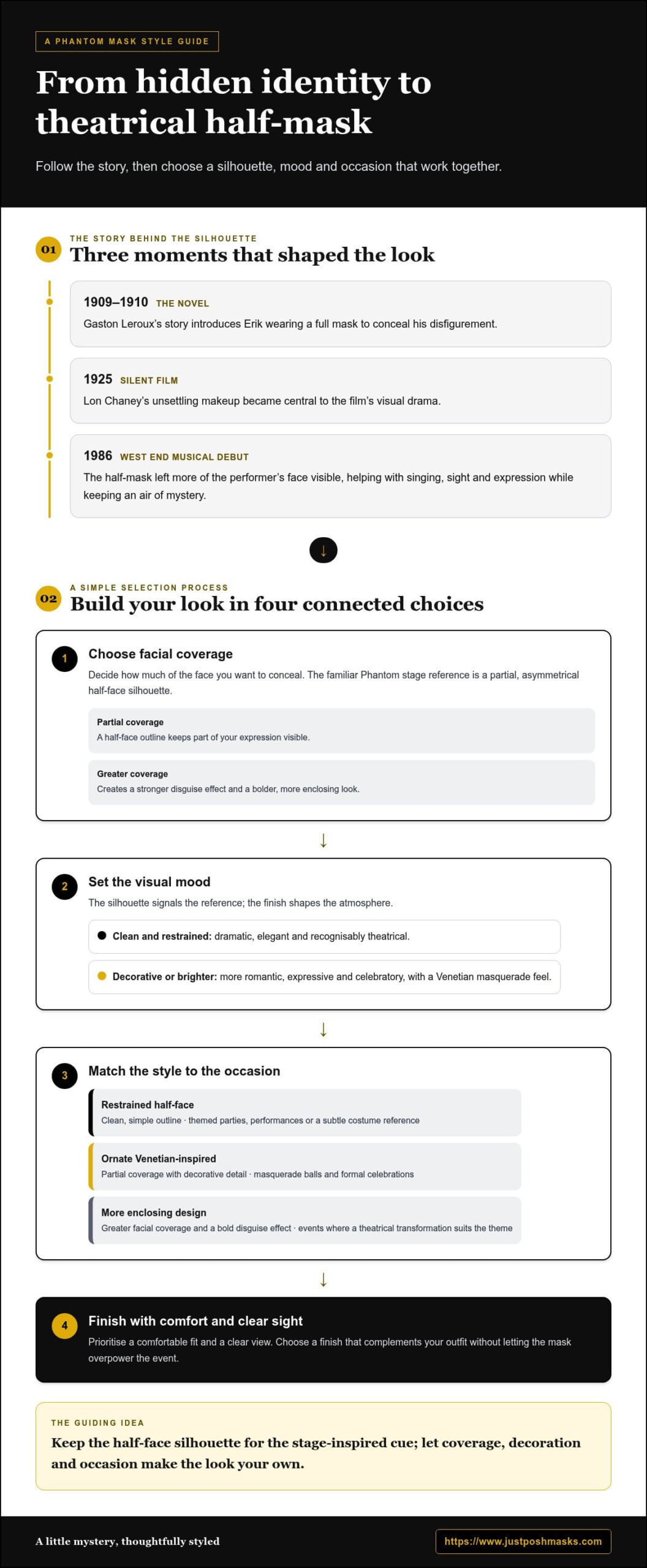
The Phantom’s look has never belonged to one adaptation alone. Gaston Leroux introduced Erik in his novel Le Fantôme de l’Opéra, first published in serial form between 1909 and 1910. Since then, film and stage versions have shaped his appearance in different ways, giving the mask a history as layered as the character himself.
The Phantom in Gaston Leroux’s novel
In Leroux’s story, Erik’s face is markedly different from those around him, and he wears a full mask to conceal it. This is the novel’s portrayal, not a template every later version follows. The 1925 silent film, for example, made Lon Chaney’s unsettling makeup central to its visual drama; Britannica’s account of Lon Chaney’s Phantom makeup offers a glimpse of that landmark interpretation. The distinction matters: a Phantom-inspired mask can nod to the character without treating one adaptation as the definitive design.
Why the musical’s half-mask made such an impression
The musical’s half-mask, associated with its West End debut in 1986, offered a different visual language. Rather than concealing the entire face, it leaves part of the performer’s expression visible, allowing mystery and emotion to share the stage. That partial concealment turns the mask into more than a costume detail: it helps tell a story about identity, secrecy and the tension between what is hidden and what is revealed.
The half-mask’s theatrical power lies in its contrast: it conceals part of the face while leaving enough expression visible for the audience to read the character’s shifting emotions.
That balance also explains its appeal beyond the theatre. A recognisable half-face silhouette can signal Phantom-inspired drama at a masquerade without requiring an exact replica of a particular production’s costume. The musical’s image is so familiar that even its full-mask promotional logo, created before the stage design changed, reflects how interpretations can diverge.
For your own take on theatrical mystery, explore authentic Venetian masquerade masks. Traditional Venetian craftsmanship offers inspiration for a distinctive finishing touch, from a simple eye-mask shape to more elaborate decoration.
How to compare Phantom of the Opera mask styles for your occasion
Choosing a phantom of the opera mask is a balancing act: you want enough theatrical character to make the reference clear, without letting the mask overpower your outfit or the event. Start with silhouette and facial coverage, then consider how the finish will look up close and from across the room.
| Style direction | Silhouette and coverage | Visual mood | Suitable occasion |
|---|---|---|---|
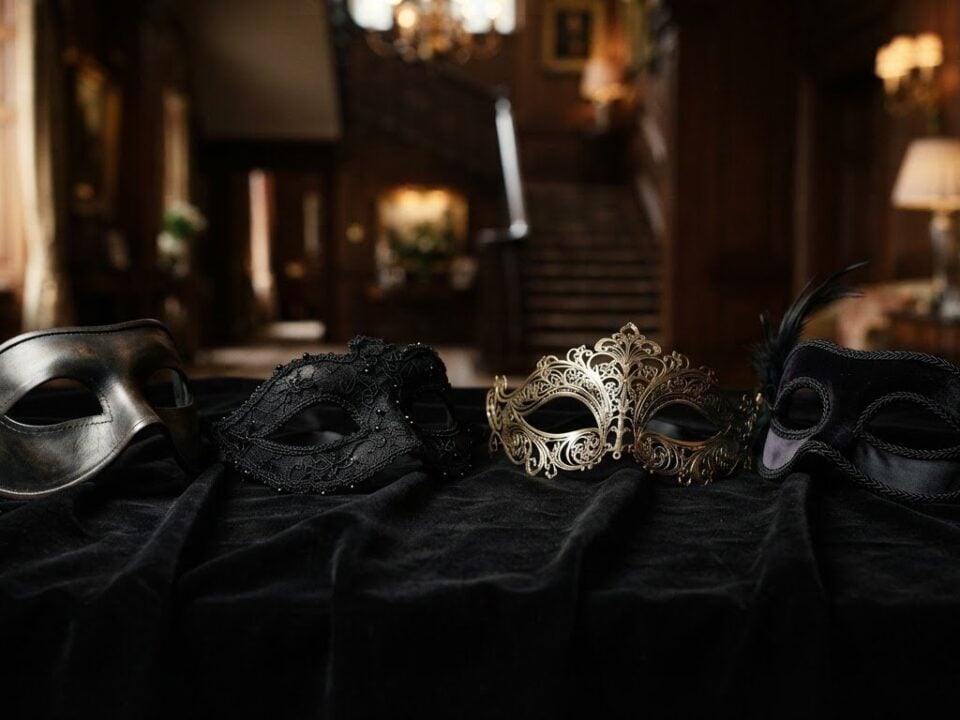
| Restrained half-face | Partial coverage with a clean, simple outline | Dramatic and recognisably theatrical | Themed parties, performances or a subtle costume reference |
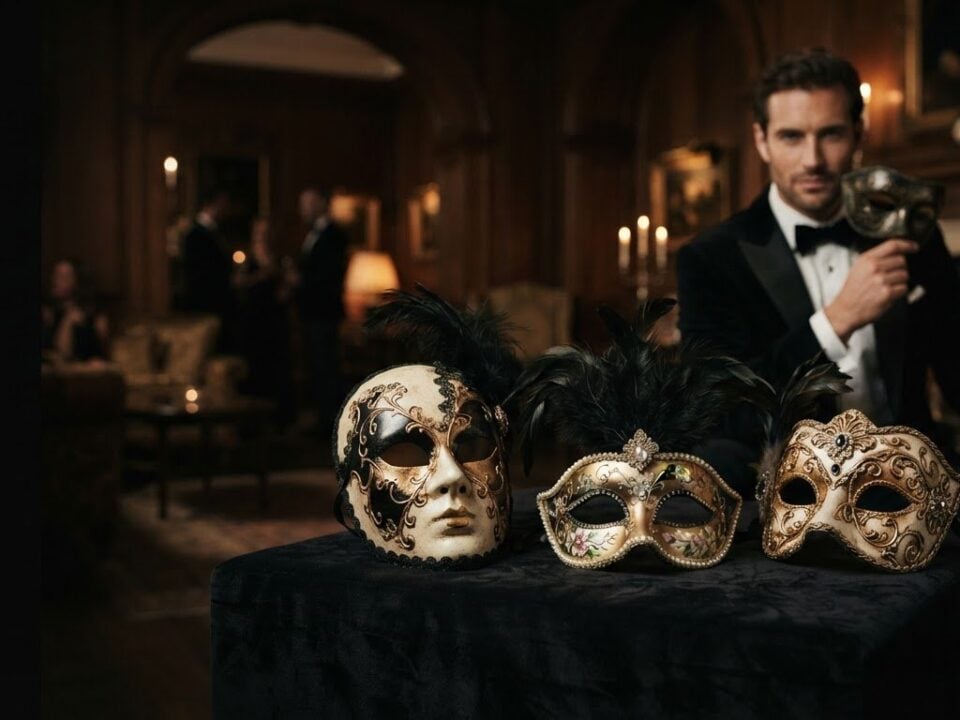
| Ornate Venetian-inspired | Partial coverage with more decorative detailing | Opulent, expressive and distinctly masquerade-ready | Masquerade balls and formal celebrations |
| More enclosing design | Greater facial coverage, creating a stronger disguise effect | Mysterious and bold | Events where a more theatrical transformation suits the theme |
These are styling directions, not definitive historical versions. A half-face outline often makes the Phantom reference easiest to recognise, while intricate ornament can shift the look towards Venetian pageantry. Neither needs to reproduce a particular production. Consider how the mask will read in photographs and at a distance: a crisp silhouette stays legible across a room, while fine details reward a closer look.
Browse authentic Venetian masks for artisan-made inspiration, from understated shapes to more elaborate finishes.
Match the mask to the event and your outfit
For a formal ball, decorative detailing can feel at home; for a relaxed themed gathering, a simpler outline may be easier to style. Let one element take the lead. Coordinate the mask’s colour or ornament with a detail in your clothing rather than matching every accessory. The result feels considered, not like a costume assembled all at once.
Weigh material and finish alongside appearance. Consider how the surface, embellishment and shape complement your outfit, and whether the design feels comfortable for the length of the occasion. For practical styling guidance, read how to wear a masquerade mask.
Choose and wear a Phantom-inspired mask with confidence
The best choice suits the occasion and feels natural to wear, not simply the most dramatic design. Use this quick sequence to bring the look together:
- Choose the occasion. Decide whether the event calls for a subtle nod to the Phantom or a full theatrical statement.
- Decide on coverage. Consider how much of your face you want the mask to cover and whether that shape feels comfortable.
- Compare finishes. A restrained outline can keep the look sleek, while ornate details bring a more opulent masquerade mood.
- Consider fit and visibility. Choose a mask that feels comfortable and leaves your view unobstructed.
- Complete the look. Coordinate one colour or detail with your outfit, then let the mask provide the character.
A simple checklist before choosing
Picture the event before settling on a style. A formal ball may welcome a more elaborate finish, while a casual themed gathering might call for something lighter in visual impact. Consider how the mask sits on your face and whether its shape leaves your view clear. Then check that its colour and detailing complement your clothing. A little coordination goes a long way; a head-to-toe costume isn’t required.
As you compare options, focus on three practical points: how much of your face the design covers, whether you can see comfortably, and whether the finish suits the event. Those checks help narrow the choice without losing sight of the fun.
Make the mask part of the character
The Phantom’s theatrical presence doesn’t depend on an elaborate costume. Try composed posture and restrained styling, allowing the mask to suggest mystery rather than adding detail to every part of your outfit. You can take inspiration from the character without copying a specific stage production exactly; your choice of finish and clothing makes the interpretation personal.
Before the event, wear the mask briefly and move naturally in it. Notice whether it stays comfortable and whether your view remains clear. If either feels distracting, reconsider the shape or fit so the evening can be about enjoying the occasion, not adjusting your accessory.
A phantom of the opera mask should feel expressive as well as wearable. For an elegant finishing touch rooted in Venetian mask-making tradition, explore Venetian masquerade masks.
Find the finishing touch that feels like you
The Phantom’s mask has travelled from Gaston Leroux’s story through many stage and screen interpretations, so there’s no single look every fan needs to copy. A recognisable half-face silhouette can suggest theatrical mystery, while an ornate Venetian-inspired finish lets you make the idea your own.
As you choose a phantom of the opera mask, let the occasion guide its level of drama, then weigh coverage, detailing and comfort together. A striking accessory should still feel easy to wear and leave your view clear, so you can enjoy the evening as much as the grand entrance.
For an expressive finishing touch, explore authentic Venetian masks crafted by skilled artisans using traditional techniques. Just Posh Masks offers a range of styles, including Colombina eye masks for a partial-face look and Volto full-face masks for more complete coverage. Browse the collection online and choose a Venetian mask for your next occasion.
Frequently Asked Questions
What does the Phantom of the Opera mask look like?
The best-known theatrical version is a pale half-mask that covers part of the face, creating an asymmetrical silhouette while leaving the wearer’s expression visible. Designs inspired by the Phantom may keep this outline simple or add decorative details for a more lavish masquerade effect. Colour and ornament can vary, so the character reference comes from the shape and styling rather than one required material or finish.
Why does the Phantom wear a mask?
In Gaston Leroux’s novel, Erik wears a mask to conceal his markedly different appearance from others. Later adaptations interpret the character and his mask in their own ways, so the reason and design can differ between versions. The covering also carries dramatic meaning: it suggests secrecy and the tension between what the Phantom reveals and keeps hidden. It’s a powerful storytelling device, not just an accessory.
Is the Phantom of the Opera mask always a half-mask?
No, the Phantom isn’t shown wearing a half-mask in every version. The partial-face design is strongly associated with the stage musical, while Leroux’s novel and other adaptations portray the character differently, including with fuller facial coverage. If you’re choosing a phantom of the opera mask, think of the half-mask as a familiar theatrical interpretation rather than a rule. Both half-face and more enclosing designs can evoke the character.
Can I wear a Phantom-inspired mask to a masquerade ball?
Yes, a Phantom-inspired mask can be a striking choice for a masquerade ball, especially if its finish suits the formality of the event. A restrained half-mask gives a subtle theatrical nod, while more elaborate Venetian-inspired detailing creates a more opulent effect. Coordinate one colour or decorative element with your outfit rather than matching every detail, and you’ll keep the look polished instead of overly costume-like.
How do I choose a comfortable Phantom-inspired mask?
Start with the amount of facial coverage you prefer, then consider whether the shape feels comfortable and leaves your view unobstructed. Think about how long you expect to wear it and whether its finish or detailing suits your outfit and occasion. If possible, try the mask on before the event and move naturally in it. A confident look should feel wearable, not like a balancing act.
What is the difference between a Phantom mask and a Venetian masquerade mask?
A Phantom mask refers to a design inspired by the character, often drawing on the theatrical half-mask silhouette. A Venetian masquerade mask belongs to a broader tradition of styles, shapes and decorative finishes, including Colombina eye masks and Volto full-face masks. The categories can overlap: an artisan-made Venetian mask may give a Phantom-inspired outfit an individual, opulent touch without copying a specific stage design.
Disclaimer
This article was created with the assistance of AI and carefully reviewed by the team at Just Posh Masks to ensure accuracy and relevance. We combine automated insights with our experience in premium face coverings and accessories to provide helpful, trustworthy guidance.