
The Connoisseur’s Guide to Authentic Venetian Masks from Venice
May 1, 2026
The Connoisseur’s Guide to Choosing the Perfect Mask for a Masquerade Ball in 2026
May 6, 2026
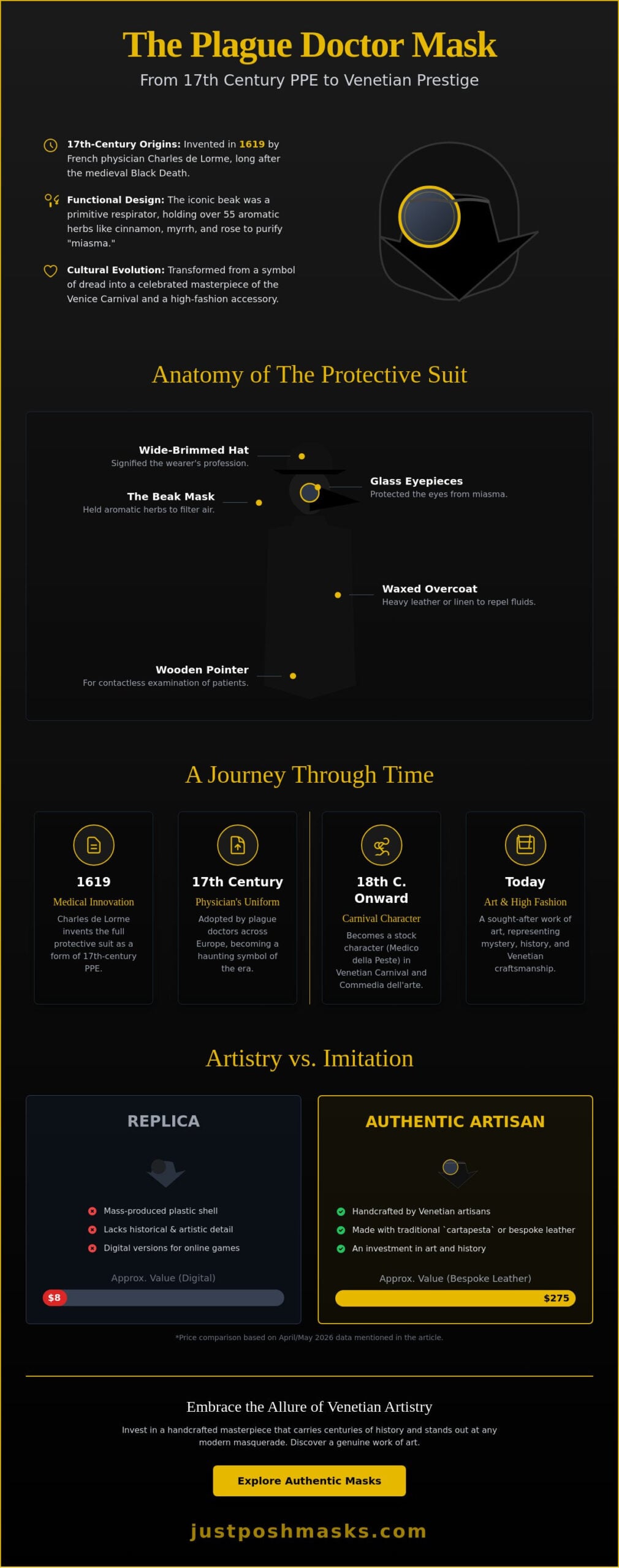
The most haunting silhouette in history wasn’t a product of the Middle Ages, but a calculated 17th-century innovation designed for both protection and prestige. You’ve likely encountered the plague doctor mask in various forms, perhaps feeling the frustration of distinguishing a mass-produced plastic shell from a true work of art. While digital versions trade for roughly $8 on s&box marketplaces as of April 2026, the physical reality of this iconic mask is far more evocative, rooted in a rich heritage of Italian craftsmanship and medical necessity.
If you’ve struggled with conflicting historical facts or felt uncertain about how to style such a bold accessory, we’re here to provide clarity. We promise to reveal the captivating evolution of the beak mask, transitioning from its 1619 origins as medical equipment to its current status as a masterpiece of Venetian fashion. You’ll learn to identify the markers of a genuine artisanal piece, understand why bespoke leather versions reach prices of $275 in May 2026, and discover how to wear this exquisite item with the confidence of a true connoisseur.
Key Takeaways
- Uncover the true 17th-century origins of the plague doctor mask and debunk the common myths surrounding its role during the Black Death.
- Explore the poetic irony of the Medico della Peste and how this medical necessity evolved into a celebrated masterpiece of the Venice Carnival.
- Gain expert advice on styling the iconic beak mask for contemporary masquerade balls, ensuring your look is both elegant and evocative.
- Understand the intricate cartapesta process and learn how to distinguish a mass-produced replica from a genuine, handcrafted Venetian work of art.
What is a Plague Doctor Mask? Defining the Medico della Peste
The Medico della Peste, widely recognized as the plague doctor mask, stands as one of the most evocative symbols of human ingenuity and historical anxiety. Originally conceived as a primitive form of respirator, this long-beaked visage was the uniform of 17th-century physicians who traversed the plague-stricken cities of Europe. These doctors were often hired by towns to treat all citizens regardless of status, and their striking appearance was intended to provide a barrier against the “miasma” or foul air believed to carry contagion. This iconic silhouette serves as a haunting bridge between the cold realities of medical history and the opulent world of Venetian artistry.
The design of the mask is instantly identifiable by its sharp, avian profile and large glass eye-pieces. While the mask is often mistakenly associated with the 14th-century Black Death, it actually emerged much later. A plague doctor would typically pair the mask with a heavy, wax-coated leather overcoat, gloves, and a wide-brimmed hat to ensure no skin was exposed to the elements. Today, the mask has shed its clinical associations, evolving into a centerpiece of high fashion and masquerade tradition that captures the imagination of collectors worldwide.
The Iconic Beak: Form and Function
The distinctive beak wasn’t merely a stylistic choice; it was a functional vessel for “theriac.” This complex medicinal concoction consisted of over 55 different herbs and spices, including cinnamon, myrrh, and honey. Physicians stuffed the hollow beak with these aromatic materials to filter the air they breathed. The bird-like shape was rooted in the contemporary belief that birds were immune to the plague and could effectively draw the “miasma” away from the wearer’s face. For the doctor, the sensory experience was a stark contrast to their surroundings. The sweet, heavy scent of dried roses and lavender masked the grim reality of the era, providing a psychological and physical buffer against the environment.
The Medico della Peste in Venetian Culture
As the threat of the plague receded, the mask began a fascinating transition from the hospital to the vibrant streets of the Venice Carnival. It became one of the most recognizable characters of the Commedia dell’Arte, though it retained a darker edge than the playful Colombina or Arlecchino. In the context of Venetian revelry, the mask serves as a poignant “memento mori,” a reminder of mortality that exists even amidst the most opulent celebrations. This transformation turned a once-terrifying visage into a symbol of sophisticated mystery. For those who wish to stand out from the crowd, wearing an authentic, handcrafted version today is a way to embrace the allure of high fashion while honoring a deeply layered history.
The True History of the Beak Doctor Mask: Debunking the Myths
Many enthusiasts and history buffs mistakenly link the plague doctor mask to the 14th-century Black Death. This is a common historical anachronism. While the imagery of the bird-like physician feels medieval, records confirm that the mask appeared nearly three centuries after the first major plague outbreak devastated Europe in 1347. Instead of being a relic of the Middle Ages, this design was a calculated innovation of the early 17th century, reflecting a new era of medical thought and protective equipment.
The complete physician’s ensemble was far more than just a mask. It was a rigorous, head-to-toe uniform that included a long coat made of waxed linen or heavy leather, leather breeches, boots, and gloves. Doctors also carried a signature wooden pointer. This cane allowed them to examine patients, point out infected areas, or even push away the desperate without making direct physical contact. It was a clinical, albeit terrifying, sight that prioritized distance and barrier protection during an age of widespread contagion.
Charles de Lorme and the Birth of Plague PPE
Charles de Lorme, the chief physician to King Louis XIII of France, is the visionary credited with inventing the full protective suit in 1619. His design wasn’t based on fashion but on the technical belief that a head-to-toe leather barrier would prevent disease from clinging to a doctor’s clothing. The mask functioned as a 17th-century respirator, featuring glass eye-pieces and a long nose to house purifying materials. You can explore the deeper nuances of this fascinating timeline in our guide on the real history of the Black Death mask. De Lorme’s invention set a standard for medical professionals across Italy and France, marking a significant step in the history of personal protective equipment.
Miasma Theory: The Science Behind the Beak
The elongated beak of the plague doctor mask was a direct response to miasma theory. Before the discovery of germs, the leading scientific belief was that disease spread through “bad air” or noxious odors. To combat this, the hollow beak was stuffed with pungent aromatics like camphor, cloves, and myrrh. These substances were thought to purify the air before it reached the physician’s lungs. According to a Deutsches Historisches Museum analysis, the materials used in these masks were often quite durable, reflecting their utilitarian, clinical purpose. As medical practices advanced, the mask’s terrifying utility began to fade, eventually finding a new life in the Commedia dell’Arte. If you’re drawn to this blend of history and intrigue, you might stand out from the crowd with a bespoke piece that honors this incredible legacy.
The Medico della Peste in the Venice Carnival
Handcrafted in the heart of Venice, the Medico della Peste has undergone a dramatic metamorphosis over the centuries. While it began as a clinical necessity for physicians, it eventually took its place as one of the most recognizable characters in the Venetian Carnival. Unlike other traditional Venetian Masquerade Masks like the Bauta or the Volto, which often aimed for total anonymity or classical beauty, the plague doctor mask brought a sense of theatrical gravitas to the canals. It’s a striking sight. The long beak cuts through the mist of the lagoon, standing out amidst the shimmering crystals and delicate lace of other revelers. This transition turned a tool of survival into a symbol of cultural identity, firmly embedding the physician’s visage into the festive traditions of the city.
There’s a profound, poetic irony in wearing the Medico della Peste during a festival. In the context of the Carnival, participants wear the face of death to celebrate the absolute vibrancy of life. It serves as a haunting reminder that even in the most opulent moments, history and mortality are never far away. The History of the Plague Doctor Costume illustrates how this attire moved from the bedside to the ballroom, becoming a staple of the festival’s aesthetic landscape alongside the most elegant evening gowns and tuxedos.
Symbolism and Social Commentary
Artisanal Evolution: From Leather to Papier-Mâché
The physical construction of the plague doctor mask has evolved alongside its purpose. Modern artisans have shifted away from the heavy, suffocating medical leather used in the 1600s. Instead, they utilize the traditional “cartapesta” (papier-mâché) process. This technique makes the mask remarkably lightweight and comfortable for long evenings of celebration. You’ll find more details on these specific craftsmanship techniques in our Authentic Plague Doctor Masks Guide. Today’s pieces are true works of art, often featuring opulent decorative flourishes. From hand-applied gold leaf and intricate macramé to delicate hand-painting, these masks are bespoke keepsakes. No two are exactly alike, ensuring your look is as individual as the artisan who crafted it.
Styling the Plague Doctor Mask for Modern Events
For the discerning guest, the plague doctor mask is no longer a mere relic of the past or a simple costume accessory; it’s a sophisticated statement of intent. Designed for those who wish to make an impression, this iconic silhouette can be elevated far beyond the generic “Halloween” aesthetic. By pairing a minimalist, artisan-crafted beak with a tailored tuxedo or a floor-length velvet gown, you create a silhouette that is both mysterious and undeniably high-fashion. It’s a bold choice. This “Black Tie” approach relies on the contrast between the mask’s historical weight and the clean lines of modern formal wear, ensuring you command the room from the moment you arrive.
While the silhouette is inherently dramatic, subculture influences like Steampunk offer an alternative path for the creative connoisseur. Incorporating metallic gears, brass-rimmed goggles, and weathered leather textures can transform the mask into a piece of wearable speculative history. Whether you’re attending a gala in London or a private ball in Venice, the key to success lies in the quality of the materials. Avoid mass-produced plastic; instead, look for the tactile richness of hand-painted finishes that catch the light of a chandelier.
Choosing the right beak size is essential for a seamless evening. While a long, sweeping beak creates the most dramatic profile for photographs, a slightly shorter, more compact version offers better mobility in a crowded ballroom. Think about how you’ll move and interact. A well-proportioned mask ensures you remain the center of attention without sacrificing your ability to navigate the event with grace.
Coordinating Your Masquerade Ensemble
Achieving a cohesive look requires careful attention to your color palette. Matte black remains the gold standard for elegance, but deep crimson and aged gold can add a layer of opulent mystery to your ensemble. Rich fabrics like heavy velvet, delicate lace, and structured wool complement the mask’s artisanal nature, creating a textured, multi-dimensional appearance. For more expert advice on perfecting your look, explore our comprehensive guide on how to wear a masquerade mask with confidence.
Practical Tips for All-Night Wear
Attending an all-night gala requires a mask that’s as functional as it is beautiful. Visibility is paramount; ensure the eye-holes are perfectly aligned with your natural line of sight to avoid a night of constant adjustments. When it comes to socializing, the beak presents a unique challenge. Many seasoned masquerade attendees find that using a straw for drinks is a discreet way to stay refreshed without removing the mask. Finally, always opt for silk ribbons over elastic. Ribbons provide a more secure, bespoke fit and add a luxurious finishing touch that won’t ruin your hairstyle. Discover your perfect finishing touch among our authentic Venetian collection today.
Investing in Artistry: What Makes an Authentic Plague Doctor Mask?
Handcrafted in the heart of Venice, an authentic plague doctor mask is more than a mere costume; it’s a testament to centuries of Italian heritage. While mass-produced replicas often rely on thin plastic that feels disposable, a genuine piece is built using the time-honored “cartapesta,” or papier-mâché, technique. This process involves layering strips of paper and plaster into a mold, resulting in a structure that is remarkably lightweight yet surprisingly durable. It’s a slow-paced, meticulous art form. Choosing an artisanal piece means you’re investing in a keepsake designed to last for generations, rather than a fleeting party favor.
The allure of the Medico della Peste lies in its tactile quality. When you hold a handcrafted mask, you feel the texture of the hand-painted finish and the weight of the history it represents. It’s about the relationship between the wearer and the work of art. This dedication to quality ensures that you’ll stand out from the crowd at any event, carrying a piece of Venetian mystery with you. These masks are designed for those who value quality over mass production and heritage over fleeting trends.
Material Matters: Leather vs. Papier-Mâché
The Perfect Finishing Touch
When inspecting a high-end plague doctor mask, the beauty is in the details. Look for hand-painted accents that follow the curve of the beak, or the way a silk ribbon is securely attached to the temples. Because these pieces are created by hand, no two masks are exactly alike. You should embrace the subtle variations in paint or texture as a seal of authenticity. These small variations are what make your mask a bespoke work of art. To find your own masterpiece, we invite you to explore our collection of authentic Venetian Plague Doctor masks and discover the perfect finishing touch for your next big reveal.
Embrace the Mystery of the Medico della Peste
The journey of the plague doctor mask from its 1619 medical origins to its status as a pinnacle of Venetian high fashion reveals a captivating story of resilience and artistic transformation. You’ve discovered that this iconic beak is far more than a historical relic; it’s a bridge between 17th-century intrigue and modern elegance. By understanding the shift from functional leather to the lightweight beauty of artisanal cartapesta, you’re now equipped to choose a piece that truly honors this legacy while ensuring your comfort throughout the evening.
Whether you’re preparing for a sophisticated masquerade ball or seeking a unique memento mori for your collection, the right piece ensures you’ll stand out from the crowd. For those who appreciate this philosophy in their daily wardrobe, you can discover Memento Mori Clothing for apparel that captures a similar aesthetic. Since 2010, Just Posh Masks has specialized in providing these exquisite designs, each handcrafted by skilled Venetian artisans using authentic traditional techniques. We pride ourselves on offering a premium experience, supported by reliable UK-based delivery to ensure your piece arrives in time for your next special occasion.
Discover our exquisite collection of handcrafted Plague Doctor masks and find the perfect finishing touch for your big reveal. Step into the night with the allure and confidence of a true connoisseur.
Frequently Asked Questions
Why did plague doctor masks have long beaks?
The long beak was designed to act as a primitive air filter to protect the physician from noxious odors. Doctors filled the hollow space with pungent materials to counteract “miasma,” the foul air once believed to spread contagion. This functional design allowed the plague doctor mask to provide a sensory barrier between the wearer and their environment. It created a pocket of purified air in an age before modern germ theory was understood.
Was the plague doctor mask used during the Black Death?
No, the mask was not used during the Black Death of 1347. It actually appeared three centuries later, with the first recorded design emerging in 1619. Historical records from the 14th century show that physicians wore no such specialized equipment during the initial pandemic. The bird-like silhouette is strictly a 17th-century innovation, though it’s often incorrectly depicted in modern media as a medieval accessory.
What herbs were put inside the plague doctor mask’s beak?
Physicians filled the beak with a complex mixture known as theriac, which often contained more than 55 different herbs and spices. Common ingredients included camphor, cloves, myrrh, and dried rose petals or lavender. These aromatics were packed tightly into the nose of the plague doctor mask to neutralize the smells of illness. This fragrant barrier was considered a medical necessity for any doctor treating victims during the 1600s.
Is the plague doctor mask scary or elegant for a masquerade ball?
The mask is a sophisticated blend of both, serving as a powerful “memento mori” that commands respect in any ballroom. While its silhouette is undeniably haunting, an artisan-crafted piece finished with gold leaf or intricate hand-painting becomes a symbol of high-fashion mystery. It’s designed for those who wish to make an impression. When paired with formal evening wear, it transitions from a clinical tool into a masterpiece of evocative Venetian style.
Who invented the plague doctor costume?
Charles de Lorme, the chief physician to King Louis XIII of France, invented the full plague doctor costume in 1619. He envisioned a complete head-to-toe barrier made of leather or waxed linen to prevent disease from clinging to clothing. His original design included the iconic beak mask, a long overcoat, and a wooden pointer. This ensemble became the standard personal protective equipment for physicians across Italy and France during later outbreaks.
What is the difference between a Medico della Peste and a Crow mask?
The Medico della Peste is a specific historical character rooted in medical history and Venetian tradition, whereas a Crow mask is a fantasy or animal-themed piece. A true plague doctor mask features glass eye-pieces and a hollow beak meant for herbs. In contrast, Crow masks usually focus on realistic feathers or a more animalistic, curved beak without the clinical associations or the structured bridge required for historical accuracy.
Can I wear glasses with a plague doctor mask?
Wearing standard glasses underneath these masks is usually quite difficult because of the narrow bridge and integrated glass eye-pieces. The snug, artisanal fit of a traditional Venetian piece doesn’t leave much room for frames. For the best experience at a masquerade ball, we recommend using contact lenses. This ensures you maintain full visibility and comfort without compromising the sleek, historical silhouette of your ensemble.
Are authentic plague doctor masks made of leather or papier-mâché?
Both materials are used, but they serve different purposes for the modern wearer. Historical purists often prefer rugged leather for its authentic, clinical feel and durability. However, traditional Venetian artisans use papier-mâché, or “cartapesta,” to create lightweight, opulent masks for the Carnival. While leather offers a masculine, grounded aesthetic, papier-mâché allows for the intricate hand-painted details and gold leaf flourishes that define high-end masquerade fashion.
Disclaimer
This article was created with the assistance of AI and carefully reviewed by the team at Just Posh Masks to ensure accuracy and relevance. We combine automated insights with our experience in premium face coverings and accessories to provide helpful, trustworthy guidance.