How to Choose a Masquerade Mask for Your Face Shape and Fit
November 13, 2026
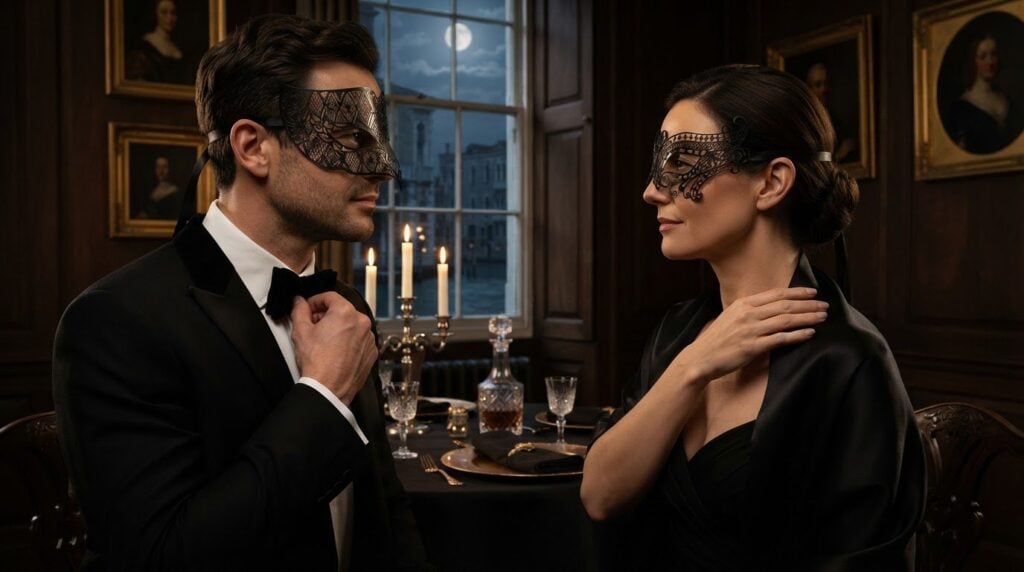
A mask you hold can make a striking entrance, but it occupies one hand. The benefits of a handheld masquerade mask include avoiding pressure on your face, leaving your glasses undisturbed and showing off your make-up in the candlelight. Its stick also lets you raise or lower the mask easily as you move between photographs and conversation.
That freedom differs from wearing a mask throughout the evening. You’ll need to carry it when holding a drink or handbag, and its weight and balance affect how comfortable it feels in your hand. A well-balanced design is easier to display gracefully; an awkward one may become less charming as the evening goes on.
Here, discover how a handheld style works with glasses, what to consider about weight and balance, and the trade-off between a dramatic reveal and keeping both hands free. This will help you choose the kind of mystery that suits your plans, whether you’re posing for a portrait or heading to the dance floor.
Key Takeaways
- Choose a handheld style if you’d like to reveal your make-up or wear glasses without a mask resting on your face.
- Consider what else you’ll carry at the event: holding a mask can be awkward when you also have a drink or handbag.
- For an event lasting hours, a hands-free mask may be more comfortable; a mask that pinches during fitting is unlikely to feel better later.
- Think about how you’ll use the mask throughout the evening, from photographs and conversation to eating, drinking and dancing.
1. Convenience of handheld masks for people wearing glasses
A handheld mask stays in your hand rather than resting over your eyes. That makes it a practical choice if your glasses are part of your evening look. Raise the mask for a photograph, then lower it to read a menu or recognise someone across the room. Your frames stay in place without a mask pressing against them.
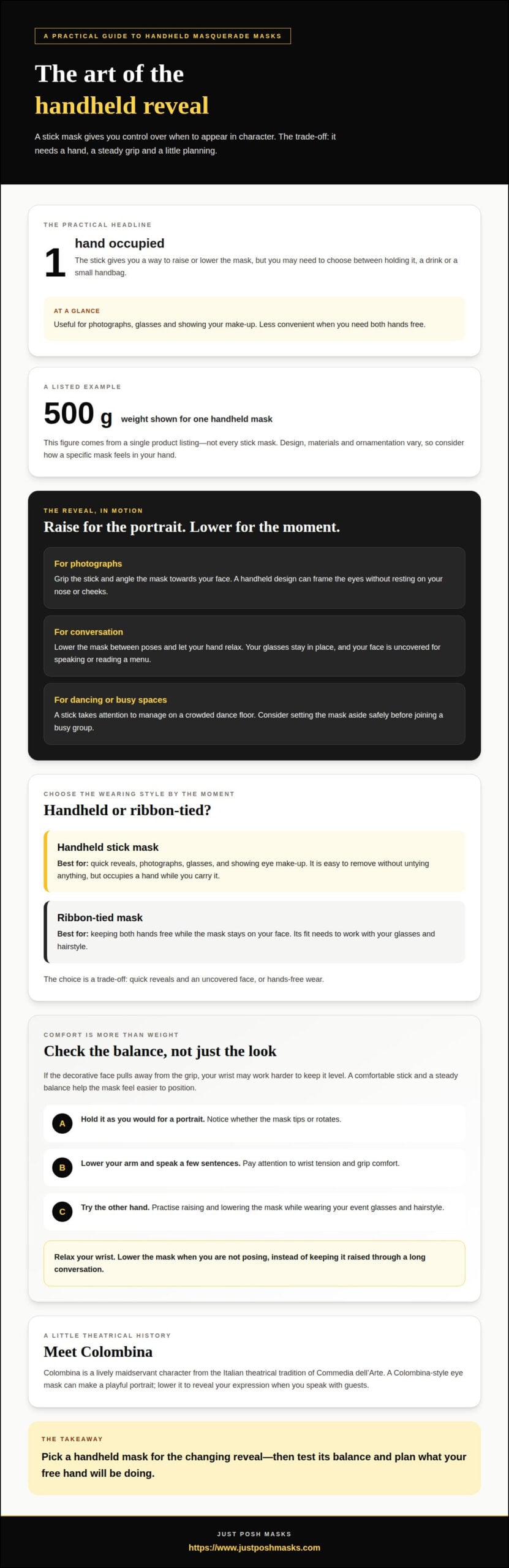
One benefit of a handheld masquerade mask is the changing reveal. For example, raise a Colombina-style eye mask for a portrait, then lower it while speaking with guests. Colombina is a lively maidservant character from the Italian theatrical tradition of Commedia dell’Arte. The stick supports the mask, so it doesn’t need to rest against your nose or cheeks. This style can also suit someone who wants their eye make-up visible between posed photographs.
Glasses still matter when choosing a shape. A wide frame or prominent side arms may meet the edge of a mask if you try wearing both together. With a handheld design, you can hold the mask slightly away from your face instead. Practise raising and lowering it while wearing your event glasses, especially if you plan to use it during conversation.
Handheld and ribbon-tied masks offer different advantages. A stick mask is easy to remove without untying anything, and leaves one hand free when lowered. A ribbon-tied mask stays on your face and leaves both hands free, but its fit needs to work with your glasses and hairstyle. Choose according to whether you value quick reveals or hands-free wear.
The way you hold a mask affects how naturally it moves. Grip the stick, then tilt the mask towards your face for a photograph. If its balance feels awkward, keeping it raised while talking may become distracting. Between photographs and conversation, lower it and relax your hand rather than holding a fixed pose all evening.
In the UK, prices vary with the design, materials and ornamentation. Lace, metalwork, crystals and artisan finishing can all affect the cost, so compare the details of the style you have in mind.
Masquerade styles include Colombina eye masks, full-face designs and Bauta masks. Materials used across mask styles include lace, metal and leather. These describe different looks and constructions, not a guarantee that every material comes with a handheld stick. For a handheld silhouette, consider how the mask’s shape and decoration will look beside your face.
Before the event, put on your glasses and try raising and lowering the mask with your chosen hairstyle. Check how it frames your face in photographs and whether it catches on your glasses. A short rehearsal can help you decide whether the elegant gesture of a handheld mask suits your evening better than a ribbon-tied style.
2. Mask weight and balance
With a handheld mask, comfort depends on more than weight. Its balance point affects how steady it feels when you hold it up for a portrait or lower it during conversation. If the decorative face pulls away from the stick’s grip, your wrist may work harder to keep it level. A balanced mask is easier to position naturally.
Weight varies by design and materials, so don’t assume every stick mask feels feather-light. One product listing gives a handheld mask’s weight as 500 g. That figure applies to the listed mask, not every handheld design. Consider how long you expect to hold a mask, and whether you’ll switch hands or lower it between photographs.
For comparison, lace masquerade masks tend to be flexible and feather-light, while eye masks and half masks leave the lower face uncovered. Those styles are worn differently, so their weight doesn’t tell you exactly how a handheld mask will feel in your grip. Decoration matters too: crystals or metal detailing can affect how the mask sits on its stick.
Try a short practice at home before the event. Hold the mask as you would for a photograph, then turn your head, lower your arm and speak a few sentences. Notice whether the mask tips or rotates, or whether your wrist tenses. Repeat the movement with your other hand. This simple trial helps you tell whether its balance suits your natural grip.
Check the stick as well as the mask’s face. A comfortable grip lets you hold the design steadily without clenching your fingers. Keep your wrist relaxed and adjust the angle rather than lifting your shoulder to maintain the pose. If you’re choosing between two designs, hold each as you expect to at the event, not just by its handle.
Balance becomes especially noticeable when you switch between displaying the mask and carrying it at your side. A mask that feels fine for one photograph may become tiring if you keep it raised through a long conversation. Lower it when you’re not posing and let your hand relax. The best choice is one you can control without making every gesture feel staged.
Before settling on a design, compare its materials, ornamentation and handling in the handheld mask styles. A short trial with the mask in hand can help you picture its weight and movement alongside your outfit, rather than judging its appearance alone.
3. The trade-off of carrying a handheld mask
A handheld mask lets you choose when it appears, but the stick occupies one hand. At a drinks reception, that can mean choosing between holding the mask, a glass or a small handbag. The mask is easiest to enjoy when you plan where to put it when you’re not posing.
For photographs, lift the mask into position and angle it towards your face; for conversation, lower it so your gestures feel natural. Dancing takes more thought. You can hold the mask while moving, but a busy dance floor leaves less room to manage a stick gracefully. Set it aside safely before joining a crowded group.
There isn’t one dress-code rule for carrying a masquerade mask at every UK event. Follow the invitation’s instructions and use the mask in a way that suits the occasion, such as holding it for photographs rather than blocking another guest’s view during a speech.
You can dine with a handheld mask because it isn’t fixed over your face, but you’ll need somewhere secure to put it while eating. At a seated dinner, place it carefully beside you rather than balancing it across a plate or holding it above the table. The stick makes it easy to bring the mask back into view for photographs.
A handheld mask works for dancing, dining and photographs, but each activity calls for a different approach. Raise it for a portrait, lower it during conversation, and put it aside before eating or moving through a packed dance floor. That rhythm preserves the reveal without turning every moment into a juggling act.
In the UK, specialist masquerade-mask retailers sell handheld styles. Compare the design and materials, then consider whether the stick format suits your event plans. An ornate mask can make a fine photographic accent, while a simpler design may feel easier to carry between activities.
Children and crowded events call for extra care, since a stick can bump another guest if it’s swung or held out while moving. A handheld mask isn’t automatically suitable for every child or venue. Consider whether the child can carry it calmly, keep it close in a crowd and put it down when dancing or walking through a busy space.
Plan a simple routine before the event: carry the mask at your side, lift it for a photograph, then lower or put it aside before eating. If a handbag or drink will already occupy your other hand, decide where the mask can rest between portraits. That small plan preserves the theatrical flourish without letting the accessory dictate the whole evening.
4. Are handheld masquerade masks more comfortable for long events?
For an evening that lasts for hours, a handheld mask can feel comfortable because it isn’t worn continuously against your face. But your hand does the work instead. The better choice depends on whether you’ll display the mask occasionally or keep it raised through a long reception.
A hands-free style is generally more comfortable when a mask needs to stay on for hours. A ribbon-tied mask leaves both hands available, while a handheld design needs to be carried and managed. Think about the event’s rhythm: occasional use suits a short portrait session, while hands-free wear may be more convenient for an evening of mingling.
Comfort also depends on fit. Try a wearable mask before the event and notice whether it pinches or presses at the nose bridge. A mask that pinches during fitting is unlikely to become more comfortable later in the evening. A natural fit should leave room for ordinary expressions, rather than requiring you to hold your face still.
Full-face masks can create a more complete disguise, but may be inconvenient when guests need to eat and drink. An eye or half-face style leaves more of the face uncovered. Consider the occasion: a formal portrait may favour dramatic coverage, while a dinner with several courses calls for easier access to food and conversation.
Venue conditions can affect how a mask feels over time. A full-face style may feel warmer than an eye or half mask, especially in a crowded venue or humid weather. If the event includes a packed reception followed by dinner, consider how much coverage you’ll want at each stage, not just how the mask looks in a photograph.
Plan around the moments when you’ll wear the mask. For example, use a handheld style for the arrival photograph, then put it away while eating or speaking with guests. If you want the mask to stay in place throughout the evening, choose a hands-free design and assess its fit before the event. This distinction matters more than assuming one style suits every long occasion.
So, are handheld masquerade masks more comfortable for long events? They can be comfortable if you want to avoid wearing a mask continuously, but they aren’t automatically the easiest choice for hours of use. Decide whether you’d rather support the mask by hand or wear a well-fitting, hands-free style.
Explore mask styles for your event and choose the balance of coverage and comfort that suits your plans.
Just Posh Masks: Handheld Stick Masks
Just Posh Masks offers Handheld Stick Masks for guests who want to reveal their look without wearing a mask throughout the evening. They bring theatrical flair to photographs and add a distinctive finishing touch to a masquerade outfit.
If you’d prefer a mask worn on your face, Colombina Eye Masks offer a classic eye-mask silhouette, while Volto Full Face Masks create more complete coverage. Couples Masquerade Mask Sets provide a coordinated option for two guests. Each style balances appearance and practicality differently, so let your event plans guide your choice.
For a considered choice that complements your outfit and occasion, contact Just Posh Masks.
Choose the finishing touch for your evening
The benefits of a handheld masquerade mask depend on how you want to express yourself, not just how you want to look in a photograph. Picture the evening’s defining moments: your arrival, a portrait with friends or the reveal that makes your outfit feel entirely your own. Let that image guide your final choice.
If a handheld design doesn’t suit your plans, a Colombina Eye Mask, Volto Full Face Mask or Bauta Mask offers another way to bring Venetian character to your look. The right style should complement your outfit and the atmosphere, whether you’re going to a formal ball or a lively celebration.
Give yourself room to choose a mask that feels like a natural part of the occasion. Contact Just Posh Masks to explore the possibilities, then get ready to make your entrance with confidence.
Frequently Asked Questions
What are the benefits of a handheld masquerade mask?
The benefits of a handheld masquerade mask include choosing when it becomes part of your look, rather than wearing it continuously. At a reception with a formal portrait, for example, bring it into the frame, then lower it to greet guests. This style can also suit glasses wearers who’d rather not position a costume mask over their frames. It adds a theatrical detail while keeping your face uncovered between moments of display.
How does a handheld masquerade mask compare with a wearable mask?
A handheld mask gives you more control over when you show it, while a wearable mask stays in place without needing to be held. If you’re planning to carry a clutch or raise a glass during the evening, a wearable style may suit your plans better. For an event centred on portraits or a costume reveal, holding the mask can make it part of the presentation. Choose according to what you’ll be doing most.
How do you hold and use a handheld masquerade mask?
Hold the stick securely and keep the mask close to your body as you move through the venue. For a photograph, raise it beside your face and angle the design towards the camera; afterwards, lower it before greeting guests or walking through a busy space. At dinner, set it somewhere stable rather than balancing it on the table’s edge. Practising with your outfit helps the gesture feel composed.
Disclaimer
This article was created with the assistance of AI and carefully reviewed by the team at Just Posh Masks to ensure accuracy and relevance. We combine automated insights with our experience in premium face coverings and accessories to provide helpful, trustworthy guidance.