Purple and Green Masquerade Masks: Shades and Styles
October 23, 2026
A masquerade mask for glasses wearers in the UK is most comfortable when it stays clear of your frames; a handheld mask is a practical choice because you can hold it in front of your face instead of tying it on. This helps avoid pressure on your spectacles and makes it easy to move the mask away whenever you need an unobstructed view. If you adapt a mask with foam padding, use four small strips around the edges of your glasses.
There’s no need to choose between seeing clearly and enjoying the mystery of a masked evening. The right shape and fit can let your glasses sit naturally while your mask adds an elegant finishing touch, whether you’re dressing for a ball, wedding or party. This guide explains which styles can leave room for spectacles, how to reduce pressure on your frames and what to consider for a comfortable fit. You’ll also discover why handheld, lace and open-eye designs may suit glasses wearers, and how to assess a mask’s position before the evening begins.
Key Takeaways
- Choose a mask that sits clear of your frames to reduce pressure and keep your spectacles comfortably in place.
- A handheld design lets you move the mask aside easily when you need an unobstructed view.
- When adapting a mask with foam, four small strips positioned around the edges of your glasses can help create space.
- Lightweight open-eye and lace styles may feel more comfortable alongside spectacles than heavier designs.
- Compare the mask’s shape and position with your glasses on to find a style that complements your look without obscuring your vision.
Avoiding pressure on frames
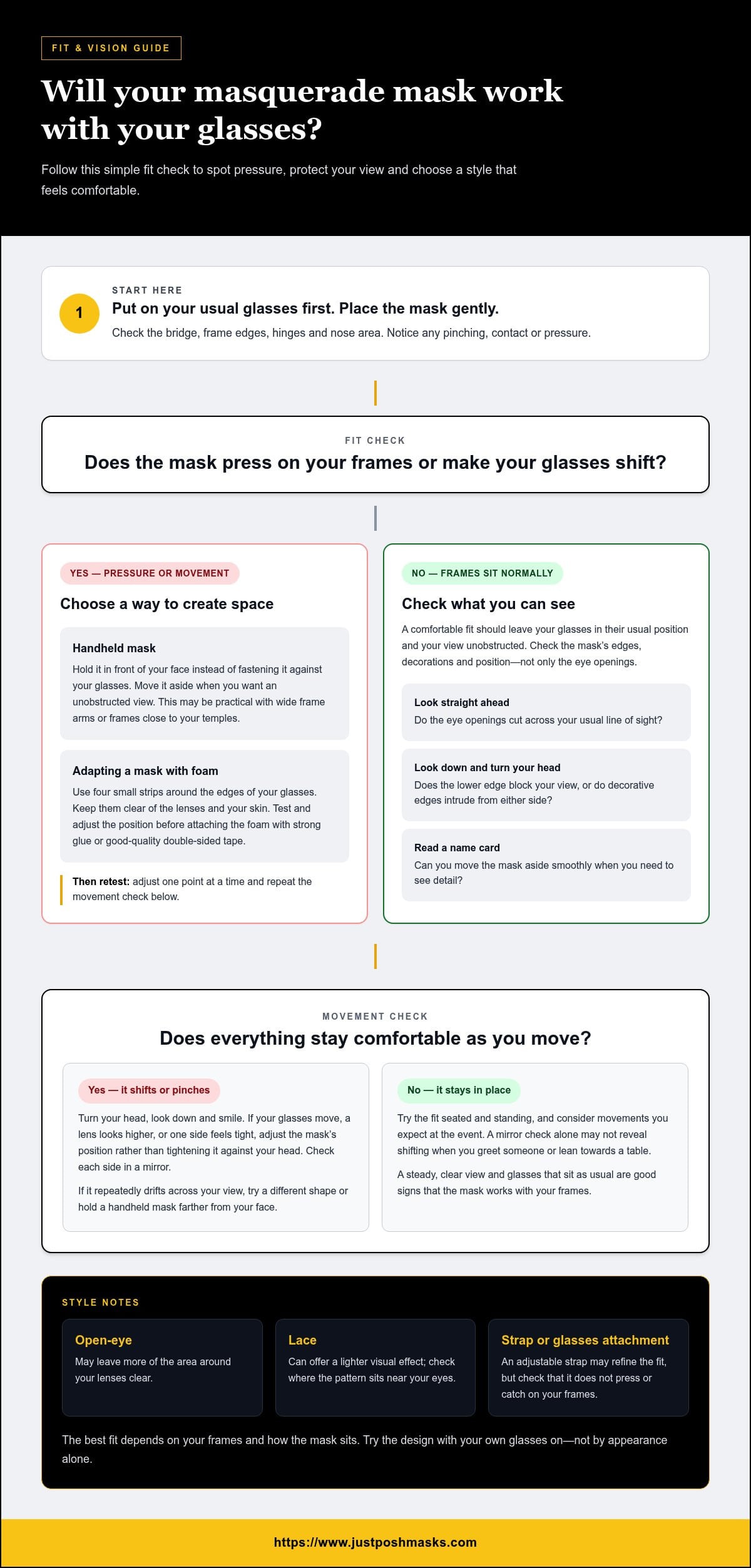
Pressure often starts where a mask meets your glasses: at the bridge, near the hinges or against the arms. A mask may look balanced in a photo but shift your glasses when you turn your head. Try it on with your usual spectacles and notice whether the frame moves, pinches or feels trapped. These signs matter more than a dramatic silhouette that only feels comfortable when you stand still.
A handheld mask doesn’t need to be fastened against your glasses. Hold it in front of your face and lower it whenever you want to speak, eat or see clearly. A mask on a stick is easy to move aside during an evening. It can be a practical choice if your frames have wide arms or sit close to your temples, where a fastening might press or catch.
If you’re adapting an eye mask with foam, use four small strips to create space around your glasses. Position them around the edges of your spectacles, clear of the lenses and your skin. Test the fit before attaching the foam, adjusting it until the mask rests without pushing your frames inward. Use strong glue or good-quality double-sided tape to attach the foam to the mask.
- Put on your glasses first. Check that the bridge and arms sit as they normally do.
- Place the mask gently. Look for contact at the frame edges, hinges and nose area.
- Move your head. Turn from side to side and look down, checking whether your glasses shift.
- Adjust one point at a time. Reposition the mask or foam, then repeat the movement test.
Pressure on one hinge can make glasses uncomfortable even when the rest of the frame feels fine. A narrow mask edge near the temple, for example, may push one arm inward and leave your spectacles sitting unevenly. Check each side in a mirror. If one lens looks higher or your frames slide when you smile, adjust the mask’s position instead of tightening it against your head.
For an evening out, test the fit both seated and standing. A mask that feels comfortable in front of a mirror may shift when you greet someone or lean towards a table. Keep a handheld mask within easy reach, or adjust the fit before getting dressed. These checks help your mask sit well without making your glasses an uncomfortable part of the costume.
Choosing a mask that does not interfere with vision
A mask should leave your glasses in their usual position and your view unobstructed. Check not only the size of the eye openings but also how the mask’s edges, decorations and position affect what you can see. A crystal beside a lens may distract you, while a low edge could block your downward view. Try the design with your own spectacles, since frame shape and lens position affect how it sits.
A handheld mask gives you control over its position. Hold it at a comfortable distance and angle, then lower it when you need to look across a room or speak face-to-face. This makes it easier to move the mask out of your line of sight during a greeting, dinner or dance, without shifting your glasses.
Before choosing a mask, test your view in situations you expect at the event. A mirror is useful, but it won’t show how the mask affects movement or peripheral vision. Try these checks with your spectacles on:
- Look straight ahead: make sure the eye openings don’t cut across your usual line of sight.
- Look down: check that the lower edge doesn’t block your view of steps, a table or a drink.
- Turn your head: notice whether decorative edges intrude from either side.
- Read a name card: confirm the mask can move aside smoothly when you need detail.
Open-eye shapes may leave more of the area around your lenses clear than masks covering a larger part of the face. Lace can create a lighter visual effect, though the placement of its pattern still matters. An intricate motif beside the eye opening, for instance, may feel busier than one placed towards the temple. Judge the mask while wearing your glasses, not by appearance alone.
Think about how you’ll use the mask during the occasion. At a crowded reception, you may want to lower it often to recognise people; for photographs, you may prefer a steady position that keeps both lenses clear. Practise moving the mask aside and returning it to the same angle. If it repeatedly drifts across your view, try a different shape or hold it farther from your face.
With a masquerade mask for glasses wearers in the UK, clear vision is part of a good fit, not an afterthought. Choose a design that works with your frames and test it during everyday movements before the event. A short rehearsal can help the mask feel like an elegant finishing touch rather than an obstacle.
Comfort and fit alongside glasses
Comfort depends on how a mask’s weight and edges meet your glasses, not just its appearance. Lightweight open-eye and lace designs are intended to work alongside spectacles. Lace bases can also help prevent a mask from feeling heavy. Look at the bridge, temples and sides of your frame: pressure in any of these places may make a mask distracting during a long evening.
Are lightweight, adjustable or elastic-strap masks better for wearing with glasses? Open-eye and lace designs can work well alongside glasses. An adjustable strap may help refine the fit, but check that it doesn’t press against your frames’ arms. A mask designed to attach to glasses is another option to consider.
An elastic strap holds a mask close to your face, so its position matters. Put on your glasses first, then fit the mask and check whether the strap pulls at the frame or catches near the hinges. A handheld design avoids a strap, while lace offers a different balance of coverage and appearance. The most suitable style depends on your frames and how the mask sits.
- Check the bridge: the mask shouldn’t push your glasses down your nose.
- Check both temples: the mask or strap shouldn’t trap either glasses arm.
- Try natural movement: smile, speak and turn your head to see whether the fit shifts.
- Consider the event: choose a style you can wear comfortably through conversation, photographs and dancing.
How much do masquerade masks for glasses wearers cost in the UK? Prices vary by mask, materials and decorative details. Compare the construction and finish of the designs you’re considering, and check the current product price before ordering.
Can a standard masquerade mask be modified to fit comfortably over glasses? Small foam strips can create extra space between your face and an eye mask. Position them around the edges of your glasses, then attach the foam to the mask with strong glue or good-quality double-sided tape. Test the fit gently and make sure the mask doesn’t press on your frames.
Where can I find handmade or custom-fit masquerade masks for glasses wearers in the UK? For handmade designs available through Just Posh Masks, look for expert craftsmanship and compare their shapes with your glasses. A standard mask can be adapted with foam, but that adjustment isn’t the same as a bespoke, custom-fit design.
Before an event, wear your chosen mask with your usual glasses and sit, stand and move naturally. A comfortable fit should let your frames stay in their usual position, without the mask pressing against the bridge or temples. That small rehearsal can make an intricate lace or open-eye design feel like part of your look, rather than something you’re eager to remove.
Are there clip-on or half-face masquerade masks that leave room for spectacles?
Traditional Venetian masks follow the contours of the face and aren’t necessarily shaped around glasses. An eye mask may leave more of your face uncovered, but its edge can still meet your frames. Wear your spectacles, place the mask gently, and check for contact at the bridge, hinges and temples. The shape only works if it feels comfortable alongside your glasses.
A larger full-face mask may sit farther from the face, leaving room for some spectacles, but the fit depends on both the mask and your frames. Try them together and check for pressure at the nose and temples. Make sure the mask doesn’t push your glasses out of position. A roomy interior may help, but trying on both is the best way to assess the fit.
Handheld and glasses-attachment masks work differently. A handheld mask stays in front of your face instead of being secured against your frames, so you can move it aside easily. A mask designed to attach to glasses offers another way to wear a Venetian design with spectacles. Lace and filigree styles have open patterns that may leave more of your face visible.
Use this quick comparison when weighing up the styles:
- Half-face eye mask: check whether its upper and side edges touch your frames.
- Larger full-face mask: assess the space between the mask and your glasses.
- Handheld mask: hold it in place without fastening it around your head.
- Lace or filigree design: consider where the pattern sits around your lenses.
Some adjustments can create extra room. Leather masks can be carefully trimmed around the eye openings, while small foam pads can create space between an eye mask and your face. Make any change gradually, then put your spectacles on and test the fit again. Keep the eye openings clear, and avoid altering the mask in a way that shifts its position or blocks your view.
For a masquerade evening, test the mask while standing, sitting and turning your head. A design that looks right in front of a mirror may shift during conversation or photographs. Notice whether your glasses move, whether the mask’s edge meets a lens and whether you can remove it smoothly. These checks can help you choose between an eye mask, a fuller shape or a handheld style.
Explore Venetian mask designs to compare silhouettes and find a style that works with your spectacles.
Just Posh Masks: Colombina Eye Masks
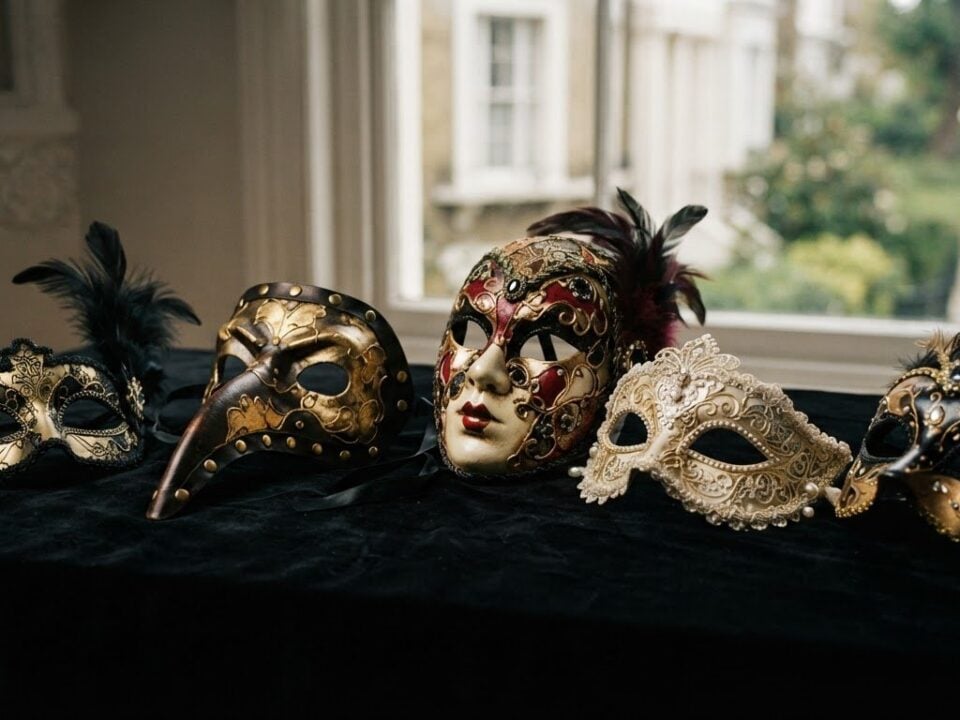
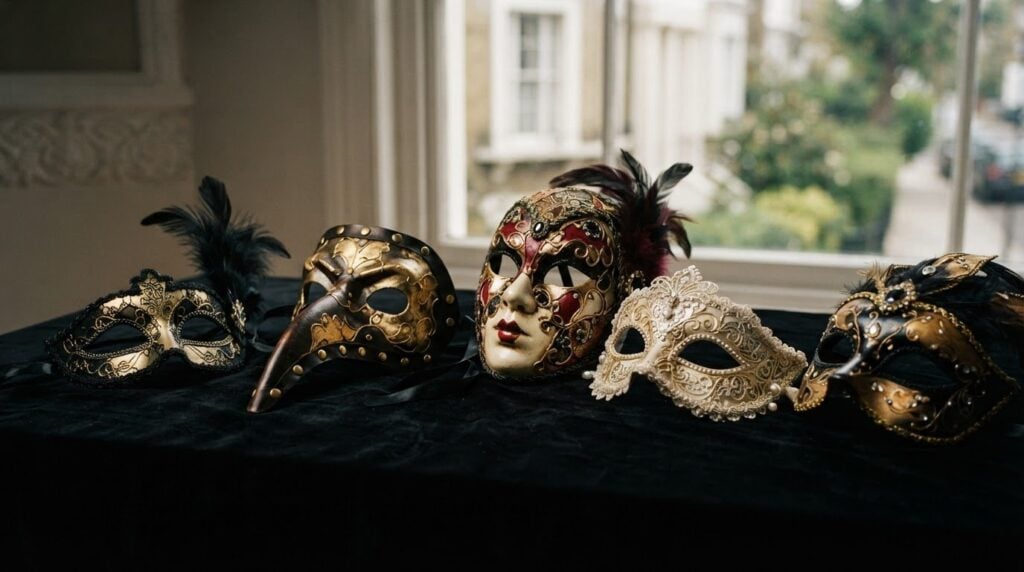
Just Posh Masks offers Colombina Eye Masks for glasses wearers seeking a traditional Venetian eye-mask silhouette. Colombina is a character from the Commedia dell’Arte, the Italian theatre tradition, and her name brings a playful touch of history to your evening attire. Before choosing a mask, compare its shape with your frames and consider whether a handheld style would suit your plans better. The collection also includes Volto Full Face Masks, Bauta Masks and Filigree Metal Masks, each offering a distinct look. Wear your glasses during your fit check, so you can judge how the design sits and whether it keeps your vision clear. For an elegant finishing touch, explore the Colombina Eye Masks and other Venetian styles at Just Posh Masks.
Choose a mask for your next grand entrance
Your mask should feel right for the occasion and work with your glasses. Picture the evening ahead, whether it’s a candlelit ball, a lively celebration or a formal gathering. Then think about the silhouette and style you prefer. A masquerade mask for glasses wearers in the UK can be both expressive and comfortable when you choose a design that suits your frames.
Just Posh Masks offers Colombina Eye Masks, Volto Full Face Masks and Bauta Masks, giving you distinct Venetian styles to explore. Think beyond the mirror, too. The character you choose can shape the mood of your outfit, from delicately mysterious to boldly theatrical. Once you have a favourite silhouette in mind, explore the collection and get in touch if you’d like help taking the next step.
Contact Just Posh Masks for help choosing a mask for your occasion, and get ready to enjoy your own little moment of Venetian glamour.
Frequently Asked Questions
Where can I buy a masquerade mask designed to fit over glasses in the UK?
You can buy a masquerade mask for glasses wearers in the UK from Just Posh Masks, which sells masks online. Its range includes masks that attach to glasses and custom-design masks, giving you options beyond a traditional mask worn separately. Consider how you want the mask to sit with your spectacles, then compare the available shapes and designs. This helps you choose for both the occasion and your preferred way of wearing it.
What types of masquerade masks are comfortable for people who wear glasses?
Handheld masks, open-eye designs and masks made to attach to glasses are all worth considering. A handheld design lets you reveal your face easily, while an open-eye lace mask offers a delicate look. Just Posh Masks also offers Colombina Eye Masks and Filigree Metal Masks. Compare where each design sits against your frames, since your glasses’ shape affects the fit.
What UK retailers sell masquerade masks for glasses wearers, and what are their reviews?
Just Posh Masks is a UK retailer offering masks that attach to glasses and other Venetian styles. When reading reviews, look for specific comments about fit with spectacles, comfort during an event, craftsmanship and how closely the mask matched its description. These details are more helpful than a star rating alone. As reviews can change, focus on recent feedback about the style you’re considering.
What size and fit measurements should I check when choosing a mask to wear with glasses?
Measure your face from temple to temple in a straight line; the website’s method uses two pencils over the ears to mark the measurement. Its fit guidance allows the first size measurement to fit faces up to 2 cm smaller or larger for resin masks, and 3 cm for paper-mâché masks. Metal masks are pliable and can be bent to fit most faces. Try the mask with your glasses on, too.
What materials and designs are least likely to scratch glasses or press on the frames?
Choose a design whose edges and decorations don’t press against your lenses, hinges or glasses arms. A handheld mask avoids resting against your frames, while lace offers an open, delicate look. Before wearing a mask for an evening, check its inside for rough edges or protruding details, then test it with your spectacles. Keep hard embellishments clear of your lenses to avoid contact.
Disclaimer
This article was created with the assistance of AI and carefully reviewed by the team at Just Posh Masks to ensure accuracy and relevance. We combine automated insights with our experience in premium face coverings and accessories to provide helpful, trustworthy guidance.