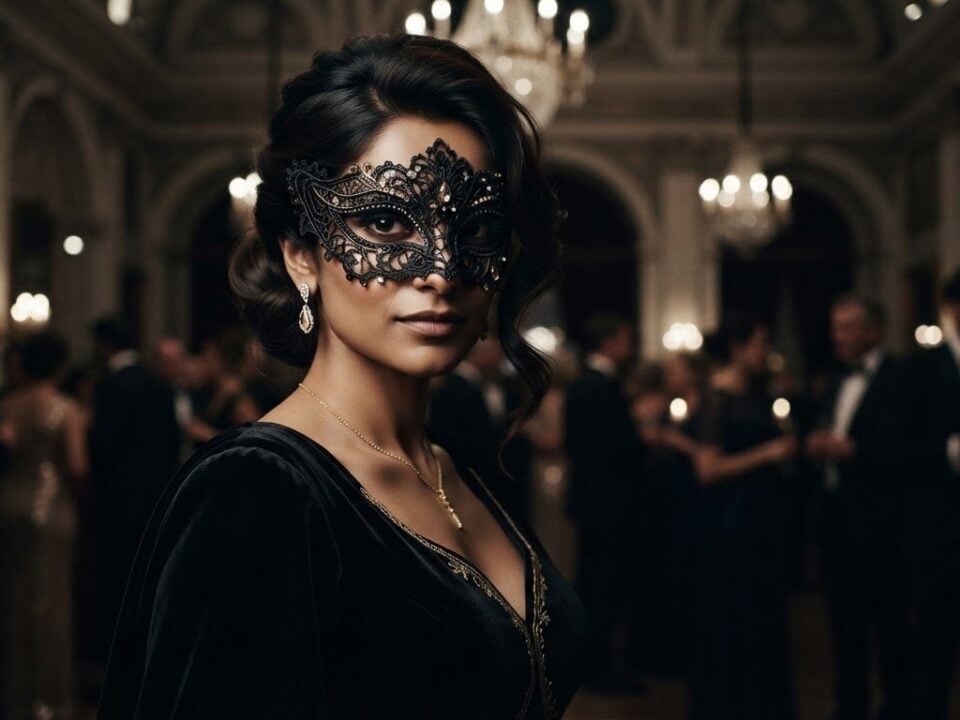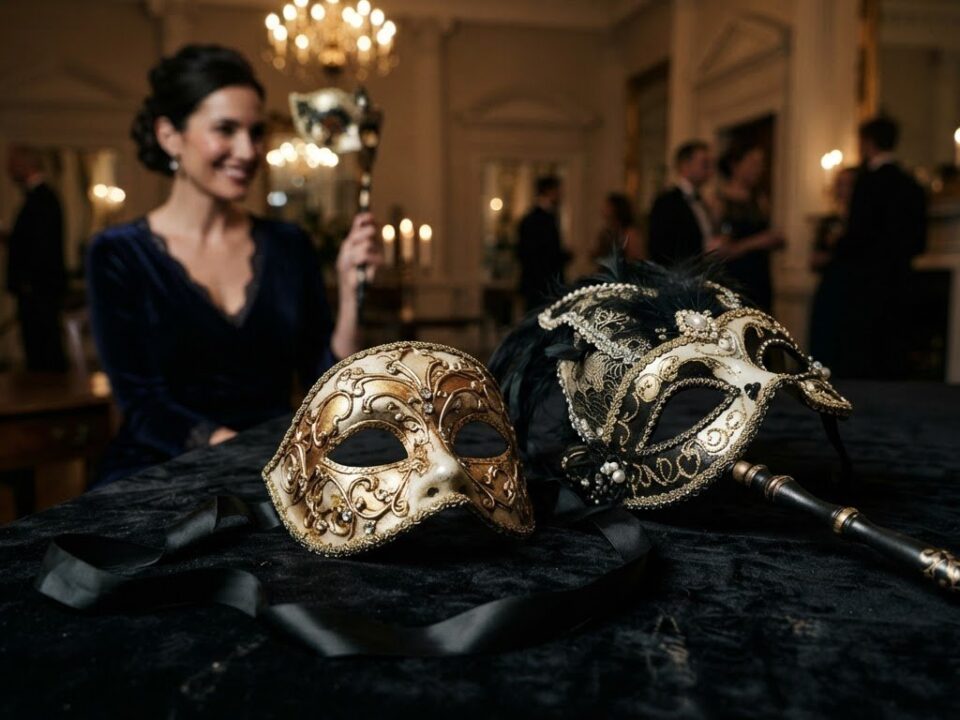
Masquerade Masks for Black Dresses and Formal Attire
October 28, 2026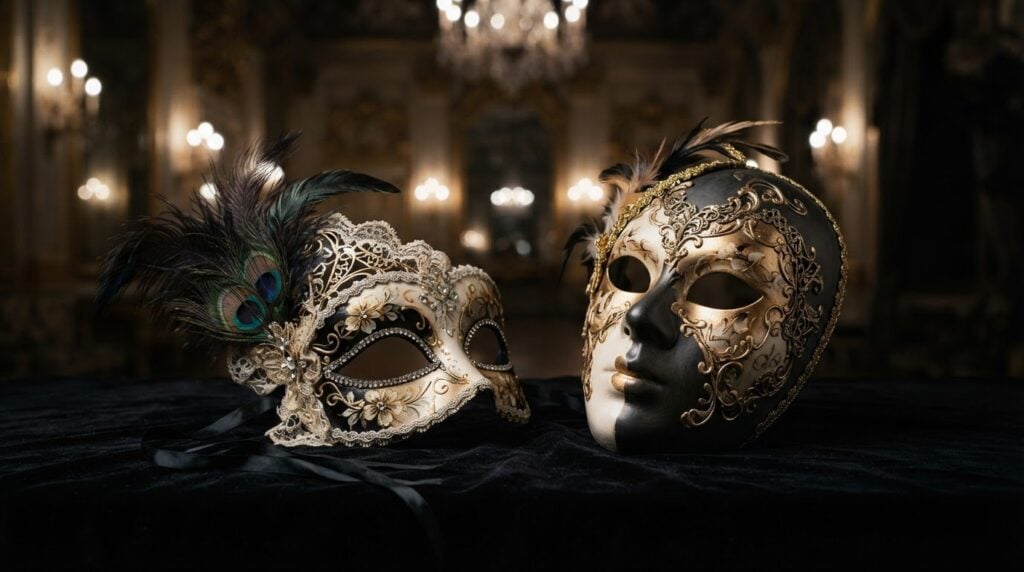
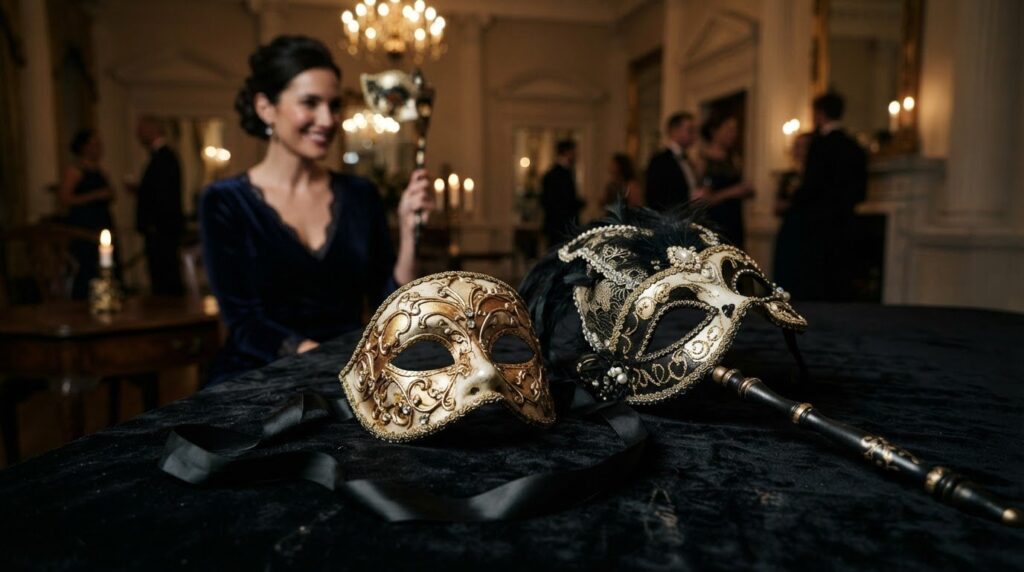
The most dramatic mask isn’t always the easiest to wear. In this full face vs half face masquerade mask guide, the key difference is how much of your face each style covers: a half-face mask covers the upper face and leaves the mouth free, while a full-face mask covers the eyes, nose and mouth for a more complete disguise. That extra mystery can make conversation and refreshments less convenient.
Choosing between them involves more than appearance. Consider whether the mask feels comfortable, suits your outfit and works for the evening you have planned, whether you want to mingle easily or make a striking entrance.
Explore how these shapes developed in Venetian traditions, what to consider for comfort and fit, and how a masked-ball dress code can guide your choice. You’ll also encounter character styles such as the elegant Colombina, the full-face Volto and the distinctive Bauta, each with its own place in Venetian mask-making. By the end, you’ll have a clearer idea of which silhouette suits your occasion and your grand reveal.
Key Takeaways
- Choose a half-face mask to keep your mouth free, or a full-face style when a more complete disguise matters more than easy conversation.
- Venetian mask traditions include distinct character styles, from the Colombina’s open lower face to the Volto’s full-face silhouette and the Bauta’s closed mouth.
- Consider fit, how long you’ll wear the mask, and whether you’ll need to eat, drink or speak during the event.
- Match the mask’s shape, colour and ornamentation to the dress code and the overall look you want to create.
- Explore Colombina Eye Masks, Volto Full Face Masks and Bauta Masks to find a Venetian style that suits your occasion.
Historical development of half masks and full-face masks
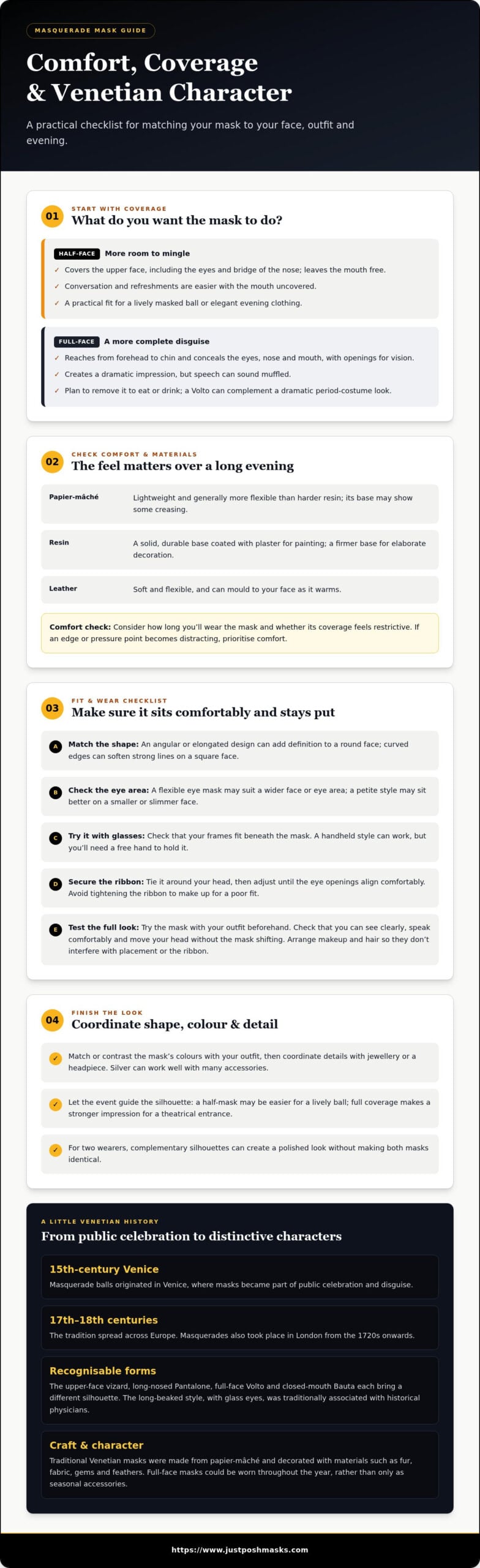
A half-face mask covers the upper face, including the eyes and bridge of the nose, while leaving the mouth free. A full-face mask reaches from forehead to chin, concealing the eyes, nose and mouth, with openings for vision. This distinction shapes conversation, refreshments and the level of disguise. A full face vs half face masquerade mask guide helps you compare those practical differences with each style’s history.
Masquerade balls originated in fifteenth-century Venice, where masks became part of public celebration and disguise. The tradition spread across Europe during the seventeenth and eighteenth centuries. In early mask-wearing history, vizard masks covered the upper half of the face. By contrast, full-face masks could be worn throughout the whole year, rather than serving only as seasonal accessories. Masquerades also took place in London from the 1720s onwards.
Venetian masks developed into recognisable forms, not simply decorative face coverings. Pantalone is a half-mask with a long nose, while the long-beaked mask style features glass eyes and a distinctive shape traditionally associated with historical physicians. The Volto covers the whole face, while the Bauta’s closed mouth helped conceal identity and social status. These distinctive shapes connect masquerade masks with Venetian character traditions.
Traditional Venetian masks were made from papier-mâché and decorated with materials such as fur, fabric, gems and feathers. Papier-mâché is lightweight and may show some creasing on its base. Resin provides a solid, durable base coated with plaster for painting. Neither material is universally best: papier-mâché offers a lighter feel, while resin provides a firmer base for elaborate decoration.
Your face shape and outfit can help guide your choice. For a round face, an angular or elongated design can add definition; for a square face, curved edges can soften strong lines. A half-mask can complement elegant evening clothing, while a full-face Volto creates a dramatic period-costume look. Match or contrast the mask’s colours with your outfit, then coordinate its details with jewellery or a headpiece. Silver can work well with many accessories.
Practicality matters at the event, too. A half-face Venetian mask leaves the mouth accessible, making conversation and refreshments easier. A full-face design creates a more complete disguise, but you’ll need to remove it to eat or drink, and speech can sound muffled. For a lively masked ball, a half-mask may be easier to manage; for a theatrical entrance, full coverage makes a stronger impression. A full face vs half face masquerade mask guide should consider the occasion as well as appearance.
In the UK, prices for full-face and half-face masquerade masks vary with the material, decoration and artisanal detail. Compare these features with how often you’ll wear the mask and the finish you want, rather than choosing by coverage alone.
Comfort and fit for extended wear
For an evening of conversation, dancing and refreshments, fit matters as much as silhouette. A mask that sits comfortably and stays secure lets you enjoy your costume without constantly adjusting it.
Breathability and Comfort
A half-face mask leaves the mouth free, while a full-face design covers it, so the half-face style is usually easier for speaking and enjoying refreshments. Some half-masks cover the nose, however, so the feel varies. Neither shape suits everyone: consider the coverage and how long you’ll wear it, and prioritise comfort if a mask feels restrictive.
Material can change the feel, too. Papier-mâché is generally more flexible than harder resin, which may make it a useful choice for a wider face. Leather is soft and flexible, and can mould to your face as it warms. These differences matter during a long themed evening, when a rigid edge or pressure point may become distracting.
Fit depends on face shape and the eye area, not just the mask’s overall width. A flexible eye mask may suit a wider face or eye area, while a petite style may sit better on a smaller or slimmer face. Standard-sized masks are said to fit most women, but that doesn’t make them the best choice for every wearer.
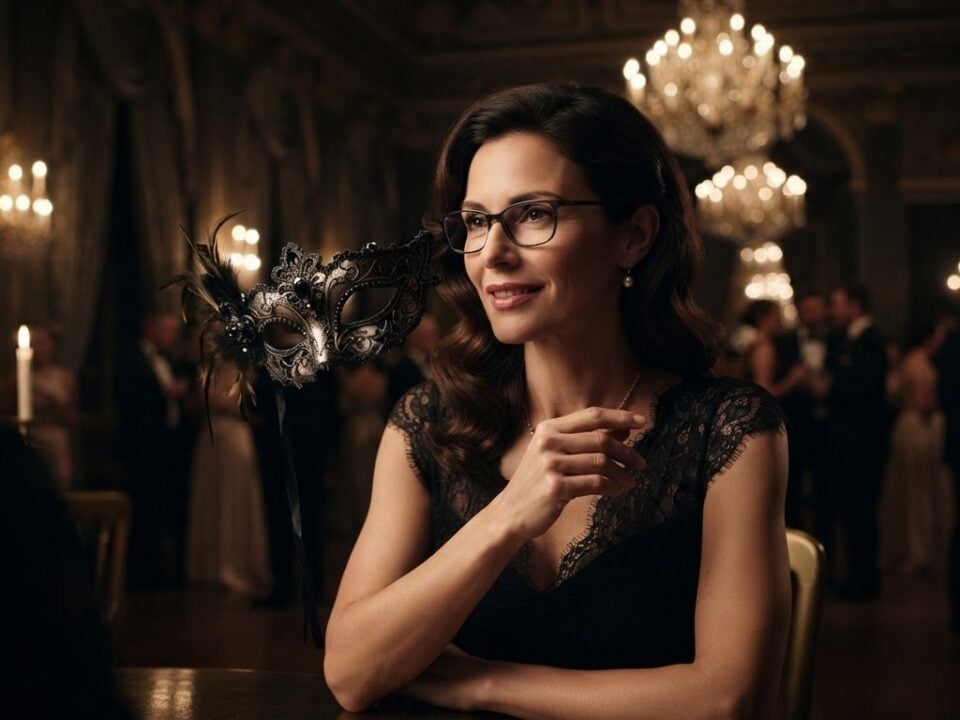
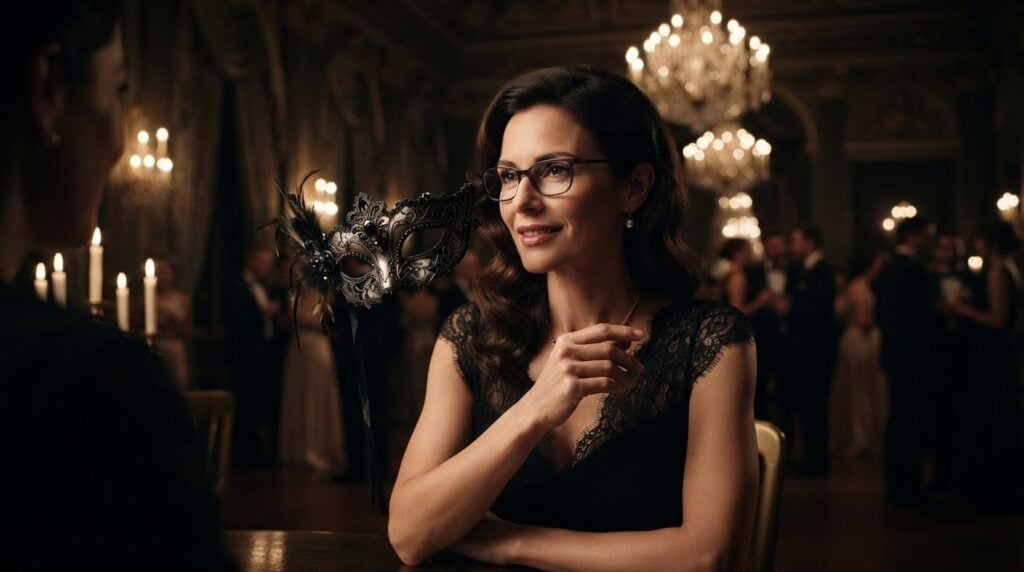
If you wear glasses, try them with the mask before the event. Check that the mask accommodates your frames; a handheld mask can also work for glasses-wearers, though you’ll need to hold it when it isn’t in use. Makeup and hair can affect placement, too: position the mask around your eye makeup, then arrange your hairstyle so it doesn’t interfere with the ribbon.
Wearing and Securing a Mask
To wear a ribbon-fastened mask, place it over your eyes and tie the ribbon around your head. A secure ribbon keeps both hands free and can help prevent losing the mask during the evening. Adjust its position until the eye openings align comfortably, rather than pulling the ribbon tighter to compensate for a poor fit.
For an extended costume event, try the mask with your outfit before you leave. Check that you can see clearly, speak comfortably and move your head without the mask shifting. If your glasses sit beneath the frame, make sure both remain comfortable together. A handheld style avoids tying on a mask, but requires a free hand whenever you hold it in place.
For a shared occasion, coordinated silhouettes can create a polished look without making both masks identical. Explore couples masquerade mask styles for complementary choices that suit two different faces and outfits.
Choosing a mask for a masked-ball dress code
A masked-ball dress code sets the mood, but your mask also needs to suit your face and outfit. Consider the event’s theme, formality and practical expectations before choosing a shape.
Dress Code Considerations
A dress code describes the expected formality and style, helping you choose a mask that belongs in the room. For a period-costume ball, traditional Venetian masks create a historically rooted look. A modern black-tie masquerade ball allows a broader range of styles, from a restrained eye mask to elaborate feathers and embellishment.
Think about how much of your face you want to conceal. A half-mask leaves the mouth visible and can feel less theatrical; a full-face style creates a more complete disguise. Match the mask’s scale to your clothing: an ornate design can complement a richly detailed costume, while a simpler shape can sit elegantly beside a tailored evening outfit.
Matching the Event Theme
The theme gives your mask a visual direction, whether the invitation suggests classic Venice or a contemporary celebration. For a Venetian-inspired event, traditional shapes and intricate decoration can echo the city’s masquerade heritage. For modern black tie, a clean silhouette or carefully chosen accent may look more appropriate than a costume-heavy design.
Colour also helps bring a mask and outfit together. Silver, black and gold are versatile choices for coordinating with accessories, while red suggests passion and power. Purple evokes royalty and ambition, and blue brings a sense of serenity and confidence. Choose a colour from your clothing or jewellery, then repeat it in the mask for a considered finish.
Face shape offers another useful guide. For a triangle-shaped face, details around the eyes and forehead can balance the proportions. A heart-shaped face often suits a mask that isn’t too wide at the bottom, so it doesn’t draw extra attention to a narrow chin. For an oval face, a half-mask or a slight tilt can create a harmonious look.
For a round face, angular or elongated shapes can add definition; round masks may emphasise its roundness. Curved lines can soften a square face, while a broad mask around the cheeks can balance a long face. These are styling suggestions, not strict rules: try the mask with your hairstyle, neckline and costume before settling on the final combination.
Event activities matter, too. At a lively masquerade ball with conversation and refreshments, a half-mask keeps the mouth accessible. For a dramatic entrance or a themed portrait, full coverage can make a stronger visual statement. The best choice is the one that fits the dress code, works with your outfit and feels natural to wear.
Venetian mask styles and character traditions
Venetian masks offer more than ornament: their shapes often suggest a character, mood or degree of disguise. Recognising these traditions can help you choose a style for the occasion, whether you prefer a formal silhouette or an elaborate theatrical presence. The key distinction is not simply full face versus half face; it’s how each design frames the wearer’s identity.
The Volto is a full-face style regarded as a mask for the general public. Its broad coverage creates a composed, almost sculptural canvas for painted details and decoration. Choose a Volto when you want a strong visual statement and complete concealment. Its formal lines can complement a dramatic costume, though the covered mouth is less practical for conversation and eating.
Colombina takes the opposite approach. This half-mask leaves the mouth and lower cheeks exposed, giving the wearer more freedom to speak and show expression. Its eye-focused shape can feel refined beside an elegant outfit, while feathers, gems or painted patterns add an elaborate touch. As an accessory, it draws attention to the eyes without hiding the whole face.
The Bauta combines a distinctive look with concealment. Its closed mouth area hides the wearer’s expression and was used to disguise identity or social status. That makes it a compelling choice for an occasion built around mystery. Pair its recognisable shape with a formal costume for a traditional Venetian impression, rather than the delicate effect of an eye mask.
Character masks offer another route into Venetian style. Pantalone is represented by a half-mask with a long nose, making its profile instantly recognisable. The Medico della Peste, or Plague Doctor, is known for glass eyes and a long beak traditionally stuffed with herbs and spices. These designs make the mask a character cue, rather than simply a finishing touch.
Use the character’s defining feature to guide the rest of your look:
- For subtle concealment: choose Colombina, which frames the eyes while leaving the lower face visible.
- For full coverage: choose Volto when a complete disguise and broad decorative surface suit your costume.
- For a mysterious profile: consider Bauta or Pantalone, whose closed mouth or long nose creates a recognisable silhouette.
- For theatrical impact: the Medico della Peste’s beak makes the character clear before you speak.
Let the character tradition lead, then consider comfort and the event’s formality. A perfect mask should express the mood you want, not merely match the invitation. Explore Venetian mask styles to find a silhouette that brings your chosen look to life.
Just Posh Masks: Colombina Eye Masks
Just Posh Masks offers Colombina Eye Masks for occasions when you want a Venetian half-mask that frames the eyes and leaves the lower face visible. For a more complete disguise, Volto Full Face Masks cover the face, while Bauta Masks offer a distinctive traditional silhouette. Filigree Metal Masks are another option when intricate detail is central to your look.
These authentic Venetian styles are crafted using traditional techniques by skilled Venetian artisans. Let the event’s dress code, your outfit and the amount of coverage you prefer guide your choice, whether you’re attending a formal ball or adding a striking finishing touch to a themed costume.
Explore the masquerade mask collection or contact Just Posh Masks to find a style that suits your occasion.
Choose the mask that feels like your entrance
Your mask can do more than complete an outfit; it can set the tone for how you want to be seen. Use this full-face versus half-face masquerade mask guide to find the balance that feels right for your evening, whether you’re drawn to quiet elegance, theatrical mystery or a little of both. The best choice is the one you’ll enjoy wearing, not simply the one that makes the boldest first impression.
If you’re ready to find that finishing touch, explore Colombina Eye Masks for an expressive, eye-framing look, Volto Full Face Masks for dramatic coverage, or Bauta Masks for a distinctive Venetian silhouette. Browse Just Posh Masks’ collection to find a style that brings character to your occasion and makes the look your own.
Explore Just Posh Masks and choose your Venetian style. Your next grand entrance is yours to create.
Frequently Asked Questions
What are the pros and cons of full-face versus half-face masquerade masks?
Full-face masks create a dramatic, unified look, while half-face styles leave more room for expression. Consider the impression you want in photographs: a Volto can make a costume feel like a complete character, whereas a Colombina lets your smile remain part of the look. The mask should also suit the event’s activities, so choose a style you’ll enjoy wearing throughout the occasion, not only for the entrance.
How do you choose the right masquerade mask size and fit?
Choose a mask that aligns comfortably with your eyes and sits securely without needing a tight pull. Try it with the hairstyle and glasses you plan to wear, then check that its edges don’t press uncomfortably against your face. Check the fit from the front and side, since a mask that looks centred in a mirror can shift when you move or turn your head.
Can you eat, drink, see, and talk comfortably in a full-face mask?
A full-face mask has eye openings for seeing, but you’ll need to remove it to eat or drink. Speech can sound quiet or muffled because the mask covers the mouth. If your evening includes a meal or frequent conversation, plan to lift or remove the mask during those moments. Try speaking while wearing it beforehand to find out how clearly your voice carries.
Are there safety or visibility risks when wearing a masquerade mask?
A mask can affect how clearly you see, particularly if it shifts or its openings don’t align with your eyes. Before wearing it at an event, test your view while standing, turning your head and walking in a clear space. Check that you can notice people and obstacles around you, and remove or reposition the mask if it interferes with moving confidently through the room.
Disclaimer
This article was created with the assistance of AI and carefully reviewed by the team at Just Posh Masks to ensure accuracy and relevance. We combine automated insights with our experience in premium face coverings and accessories to provide helpful, trustworthy guidance.